

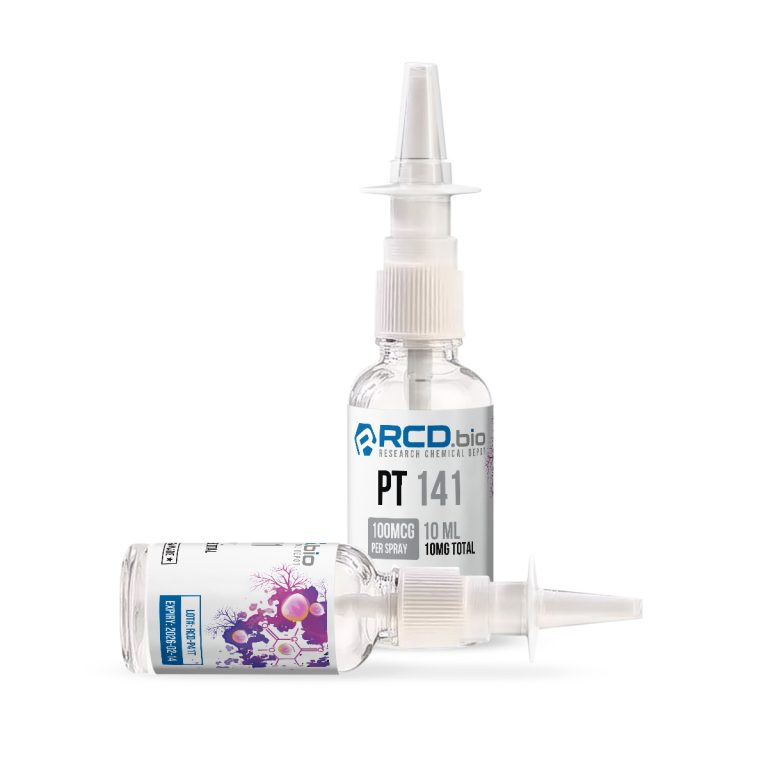
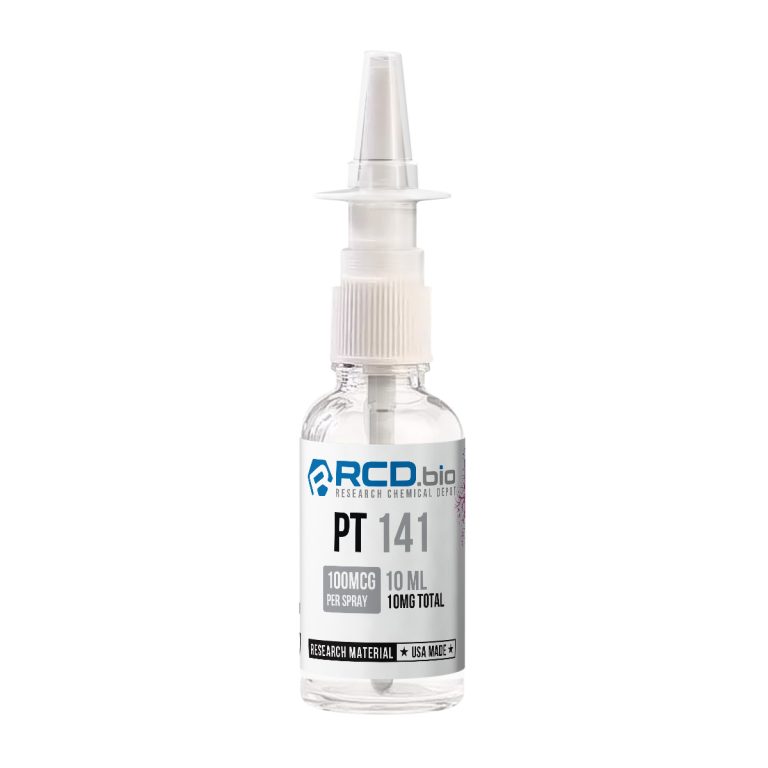
Description
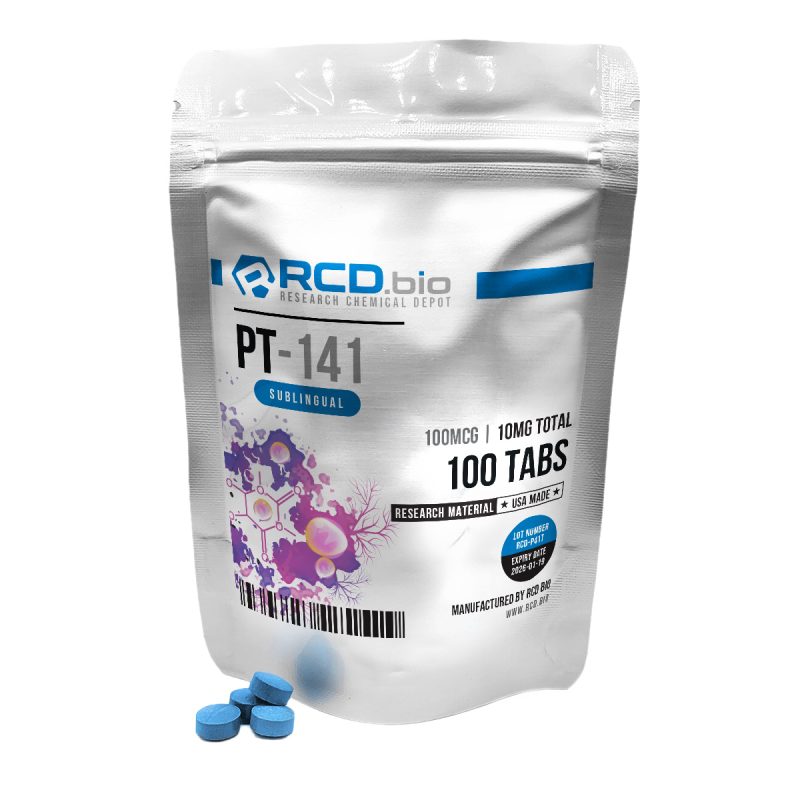
What is PT-141 Nasal Spray?
PT-141 (bremelanotide) is a synthetic cyclic heptapeptide and melanocortin receptor agonist. It is an analog of Melanotan II, which itself is derived from alpha-melanocyte-stimulating hormone (α-MSH). PT-141 was developed by Palatin Technologies during the late 1990s as part of a melanocortin peptide research program. Its core sequence is based on the His-Phe-Arg-Trp pharmacophore of α-MSH, cyclized via a lactam bridge between the Asp² and Lys⁷ residues to improve metabolic stability. PT-141 acts as an agonist at melanocortin receptor subtypes MC3R and MC4R, which are expressed primarily in the central nervous system. PT-141 has been approved by the Food and Drug Administration under the brand name Vyleesi (bremelanotide injection, 1.75 mg/0.3 mL, subcutaneous autoinjector) for the treatment of acquired, generalized hypoactive sexual desire disorder (HSDD) in premenopausal women (NDA approval, June 2019, developed by Palatin Technologies and commercialized by AMAG Pharmaceuticals). The research-grade nasal spray formulation supplied by RCDbio is not a pharmaceutical product, is not equivalent to Vyleesi, and is not approved for any use outside laboratory research contexts.
The compound has been investigated in rodent and non-human primate model systems for its interactions with central melanocortin receptors, hypothalamic neuronal activation, and appetitive behavioral outputs. Research models include Long-Evans rat preparations, Sprague-Dawley rat pituitary and hypothalamic tissue, female Syrian hamster mesolimbic dopamine system preparations, and transfected cell line systems expressing human MC3R and MC4R. The nasal spray formulation is studied as a preclinical research delivery route. Evidence of olfactory bulb-mediated CNS transport for intranasally administered peptides in rodent models supports this approach. Intranasal delivery also bypasses hepatic first-pass metabolism relative to systemic routes in preclinical pharmacokinetic models.
DISCLAIMER: PT-141 Nasal Spray has not been approved by the Food and Drug Administration for human use, consumption, or any therapeutic application. This product is supplied exclusively for in vitro and preclinical laboratory research purposes.
Chemical Properties of PT-141
| Property | Details |
| Product Type | Synthetic Cyclic Heptapeptide / Melanocortin Receptor Agonist / α-MSH Analog |
| Product Name | PT-141 Nasal Spray |
| Application | Scientific / Research Use Only |
| CAS Number | 189691-06-3 |
| Molar Mass | 1025.18 g/mol |
| Chemical Formula | C50H68N14O10 |
| IUPAC Name | (3S,6S,9R,12S,15S,23S)-15-[(N-Acetyl-L-norleucyl)amino]-9-benzyl-6-{3-[(diaminomethylidene)amino]propyl}-12-(1H-imidazol-5-ylmethyl)-3-(1H-indol-3-ylmethyl)-2,5,8,11,14,17-hexaoxo-1,4,7,10,13,18-hexaazacyclotricosane-23-carboxylic acid |
| Synonyms | Bremelanotide; PT-141; Vyleesi (FDA-approved subcutaneous form, brand name); N-Acetyl-Nle-cyclo[Asp-His-D-Phe-Arg-Trp-Lys]-OH |
| Physical Form | Aqueous nasal spray solution (lyophilized peptide reconstituted in sterile buffered solution) |
| Solubility | Soluble in sterile water and 0.9% saline at ≥1 mg/mL |
| Storage (Lyophilized) | −20°C, desiccated, protected from light |
| Storage (Reconstituted / Nasal Spray) | 2–8°C; use within 28 days; protect from light; do not freeze reconstituted solution |
| PubChem CID | 9941379 |
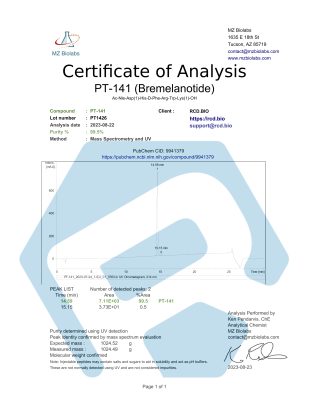
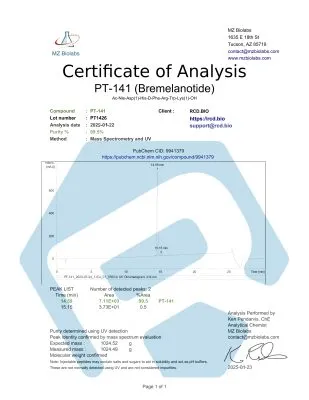
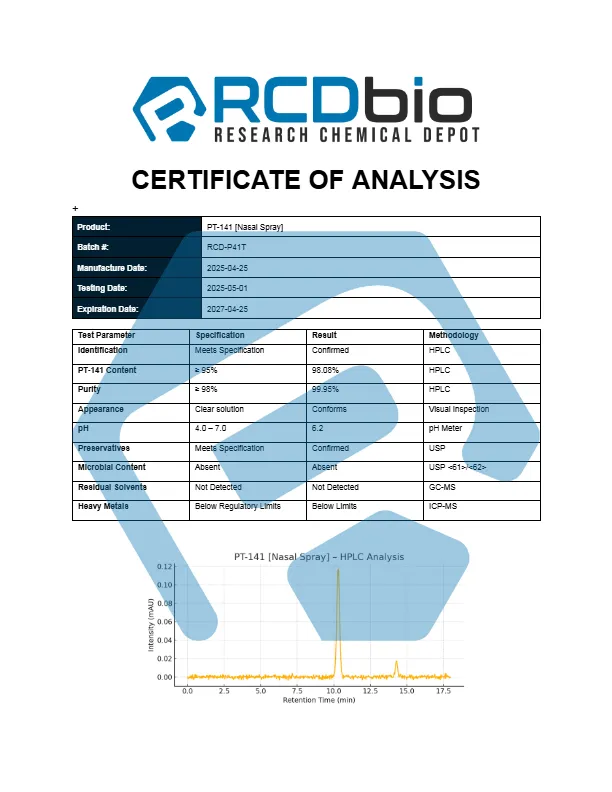
| Purity | ≥98% (HPLC verified, independent third-party laboratory analysis; COA available per batch) |
| WADA Status | PT-141 (bremelanotide) is not explicitly named as a banned substance on the 2026 WADA Prohibited List. It does not fall within the defined GHRH analog (S2.2) or GH secretagogue (S2.2) categories. WADA status under other potential prohibited classes has not been formally determined. Researchers operating within WADA Code contexts should verify current status at GlobalDRO.com prior to any sport-related research application. |
How Does PT-141 Work?
PT-141 acts as an agonist at central melanocortin receptors, primarily MC3R and MC4R, which are expressed in the central nervous system, including the hypothalamus and mesolimbic dopamine system. Receptor engagement activates downstream cAMP signaling cascades via Gs-protein-coupled pathways. The following mechanistic observations are from preclinical and in vitro data only.
MC3R and MC4R Receptor Binding
PT-141 binds MC3R and MC4R with high affinity in cell preparations expressing human melanocortin receptor subtypes. Both receptors are Gs-protein-coupled, and activation elevates intracellular cAMP. MC4R is expressed predominantly in the CNS, including the paraventricular nucleus (PVN) of the hypothalamus. In rat and non-human primate model systems, systemic administration of PT-141 produced penile erections and activated hypothalamic neurons as demonstrated by increased c-Fos immunoreactivity in the PVN, consistent with MC3R/MC4R-mediated CNS activation [Molinoff et al., 2003; PMID 12851303].
Hypothalamic Neuronal Activation
In Sprague-Dawley rat preparations, systemic PT-141 administration activated neurons in the paraventricular hypothalamic nucleus, confirmed by c-Fos immunoreactivity. Neurons in the same hypothalamic region were also labeled by pseudorabies virus injected peripherally into the rat corpus cavernosum, establishing a neuroanatomical circuit between the PVN and peripheral end organs in this preclinical model system [Molinoff et al., 2003; PMID 12851303]. This c-Fos activation pattern is consistent with MC4R-mediated hypothalamic circuit engagement in these rodent preparations.
Appetitive Behavioral Modulation (Female Rat Model)
PT-141 selectively stimulated solicitational (appetitive) sexual behaviors in female Long-Evans rats without affecting reflexive components such as lordosis or pacing. This selective pharmacological effect on appetitive sexual behavior was observed at doses that did not produce generalized motor activation, indicating specificity for central melanocortin system engagement in these preclinical preparations [Pfaus et al., 2004; PMID 15226502].
Mesolimbic Dopamine System and MC4R Expression
In female Syrian hamster preparations, MC4R mRNA was found to be expressed predominantly in dopamine neurons of the ventral tegmental area (VTA), with fewer neurons expressing MC4R in the nucleus accumbens (NAc) or dorsal striatum. In the NAc, MC4R mRNA was expressed in interneurons and rarely colocalized with D1 or D2 receptor-expressing neurons. Bremelanotide administration did not alter melanocortin receptor mRNA expression in the mesolimbic dopamine system in these preparations [Borland et al., 2025; PMID 39793696].
Intranasal Delivery & Pharmacokinetics
Olfactory Bulb-Mediated CNS Transport
When administered intranasally in preclinical rodent model systems, peptide compounds can access the central nervous system through the olfactory nerve (cranial nerve I) pathway. Compounds deposited on the olfactory mucosa are transported along olfactory axons through the cribriform plate to the olfactory bulb, from which access to deeper CNS structures has been characterized in rodent preparations. The olfactory and trigeminal nerve pathways for nose-to-brain peptide transport have been investigated in preclinical studies of peptide and protein delivery [Wong et al., 2024; PMID 38441832]. No compound-specific olfactory transport data for PT-141 have been published.
Hepatic First-Pass Metabolism Bypass
The intranasal route avoids portal circulation and hepatic first-pass metabolic processing. For peptide research compounds subject to rapid proteolytic degradation in the gastrointestinal environment, intranasal delivery has been investigated as a route that may preserve compound integrity relative to oral administration in preclinical pharmacokinetic models. PT-141, as a cyclic heptapeptide, is susceptible to peptidase activity; the lactam cyclization confers improved metabolic stability relative to linear peptides, but intranasal delivery still bypasses the GI and hepatic enzymatic environment. These observations are derived from preclinical studies and do not constitute evidence of efficacy via any route in human subjects.
Nasal Mucosal Absorption
PT-141 has a molar mass of 1025.18 g/mol (approximately 1.03 kDa). This molecular weight falls at the lower boundary of the 1–5 kDa bracket, indicating paracellular and endocytic uptake mechanisms are the likely predominant absorption pathways at the nasal mucosa alongside potential transcellular diffusion contributions. The cyclic structure and moderate lipophilicity of PT-141 may support partial transcellular mucosal diffusion in preclinical preparations. The cyclic lactam structure also confers resistance to aminopeptidase cleavage at the nasal mucosa relative to linear peptides of similar molecular weight.
Compound-Specific Pharmacokinetics
Specific intranasal pharmacokinetic data for PT-141 in standardized preclinical models are not available in the published literature as of June 2026. Published pharmacokinetic data — including the elimination half-life of approximately 2.7 hours and subcutaneous bioavailability of approximately 100% — are derived from subcutaneous administration studies supporting the Vyleesi NDA. These values cannot be directly transferred to the intranasal route. Researchers should account for the absence of compound-specific intranasal pharmacokinetic data when designing laboratory protocols.
Key Research Findings
- MC3R/MC4R Activation and Hypothalamic c-Fos (Sprague-Dawley Rat): PT-141 administration in rat preparations activated neurons in the paraventricular hypothalamic nucleus as demonstrated by c-Fos immunoreactivity; a neuroanatomical circuit between the PVN and peripheral target tissue was confirmed via pseudorabies virus tracing in these preclinical rodent model systems [Molinoff et al., 2003; PMID 12851303]
- Selective Appetitive Behavior (Female Long-Evans Rat): PT-141 selectively stimulated solicitational behaviors in female Long-Evans rat preparations without affecting lordosis, pacing, or generalized locomotion; the effect indicates specificity for central melanocortin system engagement in appetitive behavioral outputs in this preclinical model [Pfaus et al., 2004; PMID 15226502]
- MC4R Expression in VTA Dopamine Neurons (Female Syrian Hamster): MC4R mRNA was expressed predominantly in dopamine neurons of the VTA and in NAc interneurons in female Syrian hamster preparations; bremelanotide administration did not alter melanocortin receptor mRNA expression in the mesolimbic dopamine system in these preclinical preparations [Borland et al., 2025; PMID 39793696]
All findings listed above are derived from preclinical in vitro and in vivo model systems using rat, non-human primate, and hamster preparations. These observations do not constitute evidence of efficacy or safety for PT-141 nasal spray in any organism. No human clinical data have been established for research-grade PT-141 administered via the intranasal route.
What are the Potential Research Applications?
In controlled laboratory environments, PT-141 nasal spray has been investigated for the following research applications. These are observed in preclinical and in vitro contexts only and do not constitute claims of efficacy or safety in any organism.
MC3R and MC4R Receptor Binding Research
PT-141 has been investigated as a reference melanocortin receptor agonist in studies of MC3R and MC4R binding kinetics and downstream cAMP signaling in transfected cell systems expressing human receptor subtypes. Research applications include competitive displacement assays, receptor occupancy studies, and characterization of Gs-protein-coupled cAMP accumulation in preclinical MC3R/MC4R expression systems.
Hypothalamic Circuit Mapping
In preclinical rodent models, PT-141 has been used as a pharmacological tool to identify and map melanocortin-sensitive neuronal circuits in the hypothalamus. Applications include c-Fos immunoreactivity studies following systemic compound administration, neuroanatomical tracing experiments, and in situ hybridization studies of MC4R mRNA distribution in hypothalamic nuclei.
Mesolimbic Dopamine System Research
PT-141 provides a research tool for studying melanocortin receptor expression and function within the mesolimbic dopamine system. Research applications include characterization of MC3R and MC4R mRNA distribution in VTA dopamine neurons and NAc interneuron populations, and examination of melanocortin modulation of dopamine circuit activity in preclinical rodent and hamster model systems.
Appetitive Behavioral Neuroscience
In preclinical rodent preparations, PT-141 has been used to study the pharmacological dissociation of appetitive and consummatory behavioral outputs via central melanocortin system engagement. These applications are relevant to behavioral neuroscience research examining the neural substrates of motivational states in preclinical model systems.
What are the Potential Side Effects?
Researchers in preclinical and in vitro settings have noted the following observations. Long-term safety and toxicity profiles remain incompletely characterized, and no human safety data have been established for the research-grade nasal spray formulation.
- Transient blood pressure elevation (from Vyleesi label/FDA data): The FDA-approved Vyleesi subcutaneous formulation is associated with transient increases in blood pressure of approximately 2–3 mmHg systolic at peak, with full resolution within 12 hours; the relevance to the research-grade nasal spray formulation and intranasal route has not been characterized
- Nausea (from Vyleesi label/FDA data): Nausea was the most frequently reported adverse event in the Vyleesi prescribing information, reported in approximately 40% of subjects in clinical study populations; the relevance to the intranasal route and research-grade formulation has not been characterized
- Flushing and headache (from Vyleesi label/FDA data): Flushing and headache were reported as adverse events in the Vyleesi clinical study data; the relevance to the intranasal research-grade formulation has not been characterized
- Focal hyperpigmentation (from Vyleesi label/FDA data): Focal hyperpigmentation of the face, breasts, and gums was reported with repeated use of Vyleesi in clinical study data; this observation is attributed to melanocortin receptor activity at MC1R on melanocytes; relevance to the intranasal research-grade formulation has not been characterized.
- Cardiovascular contraindications (from Vyleesi prescribing information): The Vyleesi label identifies uncontrolled hypertension and cardiovascular disease as contraindications; inadvertent intranasal self-exposure during laboratory handling of PT-141 nasal spray may carry cardiovascular risk in at-risk individuals
- Absence of intranasal-specific safety data: No safety or tolerability data specific to the intranasal route of administration for PT-141 has been published in the peer-reviewed literature as of June 2026
No human safety or tolerability data have been established for PT-141 nasal spray. These observations are derived from experimental systems and data associated with a different route of administration and should not be extrapolated to human or animal outcomes via the intranasal route.
Risk & Handling
Handling Precautions
Standard laboratory PPE is required: nitrile gloves, a laboratory coat, and eye protection. The following nasal spray-specific precautions apply:
- Do not direct the nasal spray actuator toward the face, eyes, or mucous membranes during handling, testing, or transfer. CNS-active compounds may produce pharmacological effects via inadvertent intranasal self-exposure.
- Handle the nasal spray solution in a clean laboratory environment. For aliquoting or analytical sampling, use a laminar flow cabinet.
- The nasal spray solution is an aqueous formulation susceptible to microbial contamination if compromised. Handle under aseptic conditions. Discard if the solution appears cloudy, discolored, or shows particulate matter.
- Avoid aerosol generation during any manipulation of the nasal spray solution.
Exposure Risks
Risk Tier: MODERATE
PT-141 acts as a central melanocortin receptor agonist with documented cardiovascular effects via subcutaneous administration. Inadvertent intranasal self-exposure during laboratory handling carries a risk of transient blood pressure elevation and CNS melanocortin system engagement. The compound’s known cardiovascular profile — transient blood pressure increase, decrease in heart rate — makes accidental intranasal exposure a specific concern for individuals with cardiovascular risk factors. Focal hyperpigmentation has been associated with repeated melanocortin receptor activation in clinical study data. No human safety or tolerability data have been established for PT-141 nasal spray. Researchers should handle this compound with precautions appropriate to a CNS-active peptide with documented cardiovascular effects.
Storage
In-use nasal spray: Store at 2–8°C. Use within 28 days of first actuation. Protect from light. Keep upright.
DO NOT FREEZE the ready-to-use nasal spray formulation. Freezing alters pH, buffer stability, excipient integrity, and spray actuation properties.
Lyophilized bulk stock (if applicable): Store at −20°C in sealed, desiccated, light-protected containers. Avoid repeated freeze-thaw cycles.
Discard any solution that appears cloudy, discolored, or shows visible particulate matter.
FAQs
Q: How does intranasal administration facilitate CNS access for PT-141 in preclinical research models?
A: Intranasal application allows peptide compounds to access the CNS via the olfactory nerve (cranial nerve I) and trigeminal nerve pathways. Compounds deposited on the olfactory mucosa are transported along olfactory axons through the cribriform plate to the olfactory bulb, bypassing the blood-brain barrier. This transport pathway has been characterized for structurally related peptide compounds in rodent models [Wong et al., 2024; PMID 38441832]. No compound-specific olfactory transport data exists for PT-141. Intranasal delivery also avoids hepatic first-pass metabolism. No human CNS delivery data have been established for research-grade PT-141 nasal spray.
Q: What is the recommended storage and in-use shelf life for PT-141 nasal spray?
A: Sealed product should be stored at 2–8°C, protected from light. Once first actuated, in-use shelf life is 28 days at 2–8°C. DO NOT FREEZE the ready-to-use solution — freezing destabilizes the buffer, alters pH, and may damage spray actuation. Lyophilized bulk stock should be stored at −20°C in sealed, desiccated, light-protected conditions. Discard if the solution shows cloudiness, discoloration, or particulate matter.
Q: Is the PT-141 nasal spray formulation suitable for cell culture or in vitro assay systems?
A: The formulation is prepared in isotonic saline (0.9% NaCl, pH 4.0–5.0) without preservatives. The preservative-free composition reduces cytotoxicity risk in sensitive cell preparations relative to preserved formulations. Researchers should validate the vehicle independently in their specific cell system. The formulation pH (4.0–5.0) is below the typical cell culture pH range (7.2–7.4); dilution into culture medium before application is recommended. Researchers are responsible for confirming compatibility with their assay system.
Q: What is the plasma half-life of PT-141 in preclinical models?
A: The elimination half-life of PT-141 (bremelanotide) is approximately 2.7 hours, derived from subcutaneous administration pharmacokinetic data supporting the Vyleesi NDA. Subcutaneous bioavailability is approximately 100%. These values cannot be directly applied to the intranasal route. No pharmacokinetic data specific to the intranasal route have been published as of June 2026.
Q: How does PT-141 differ from Melanotan II and α-MSH?
A: PT-141 (bremelanotide) is a cyclic heptapeptide derived from Melanotan II via N-terminal acetylation and structural modification. Melanotan II has broad melanocortin receptor activity, including MC1R (tanning response) and MC4R (CNS effects). PT-141 has improved selectivity for CNS melanocortin receptors (MC3R/MC4R) with reduced MC1R activity. Alpha-MSH is the endogenous 13-residue parent peptide. In preclinical preparations, PT-141 produces CNS melanocortin effects without the pigmentation response associated with Melanotan II at equivalent doses.
Q: What is the FDA approval status of PT-141, and how does it affect the research-grade product?
A: PT-141 (bremelanotide) was approved by the FDA in June 2019 under the brand name Vyleesi for subcutaneous injection treatment of acquired, generalized HSDD in premenopausal women. The research-grade nasal spray formulation supplied by RCDbio is not a pharmaceutical product, is not equivalent to Vyleesi, and is not approved for any therapeutic indication or route of administration. It is supplied exclusively for laboratory and preclinical research purposes.
Q: What toxicity observations have been reported in preclinical or clinical data for PT-141?
A: The Vyleesi prescribing information reports transient blood pressure elevation, nausea (~40% frequency), flushing, headache, and focal hyperpigmentation with repeated use. Uncontrolled hypertension and cardiovascular disease are listed as contraindications. These observations are from the FDA-approved subcutaneous route and may not directly translate to the intranasal research-grade formulation. No human safety or tolerability data have been established for PT-141 nasal spray.
Related Research Compounds
Researchers investigating PT-141 nasal spray may also be interested in the following compounds currently available for laboratory research at RCDbio:
Melanotan II Nasal Spray — A synthetic cyclic analog of α-MSH investigated in preclinical rodent model systems for broad-spectrum melanocortin receptor binding across MC1R, MC3R, MC4R, and MC5R subtypes.
Semax Nasal Spray — A synthetic ACTH(4-7) analog investigated in preclinical rodent preparations for BDNF/TrkB pathway modulation and CNS neurotrophin expression via intranasal delivery.
Selank Nasal Spray — A synthetic analog of the immunomodulatory peptide tuftsin investigated in preclinical preparations for GABA-A receptor modulation and BDNF expression via intranasal delivery.
All products listed are for laboratory and research purposes only.
References
- Molinoff, P.B., Shadiack, A.M., Earle, D., Diamond, L.E., & Quon, C.Y. (2003). PT-141: a melanocortin agonist for the treatment of sexual dysfunction. Annals of the New York Academy of Sciences, 994, 96–102.
https://pubmed.ncbi.nlm.nih.gov/12851303/
- Pfaus, J.G., Shadiack, A., Van Soest, T., Tse, M., & Molinoff, P. (2004). Selective facilitation of sexual solicitation in the female rat by a melanocortin receptor agonist. Proceedings of the National Academy of Sciences USA, 101(27), 10201–10204.
https://pubmed.ncbi.nlm.nih.gov/15226502/
- Borland, J.M., Kohut-Jackson, A.L., Peyla, A.C., Hall, M.A., Mermelstein, P.G., & Meisel, R.L. (2025). Female Syrian hamster analyses of bremelanotide, a US FDA-approved drug for the treatment of female hypoactive sexual desire disorder. Neuropharmacology, 267, 110299.
https://pubmed.ncbi.nlm.nih.gov/39793696/
- Wong, C.Y.J., Baldelli, A., Hoyos, C.M., et al. (2024). Insulin delivery to the brain via the nasal route: unraveling the potential for Alzheimer’s Disease therapy. Drug Delivery and Translational Research, 14(7), 1776–1793.
https://pubmed.ncbi.nlm.nih.gov/38441832/
Research Transparency Note: No peer-reviewed publications specific to intranasal delivery of PT-141 (bremelanotide) are available as of June 2026. The olfactory and trigeminal nerve transport pathways used as the mechanistic basis for nasal spray peptide research compounds have been characterized for structurally related peptide hormones in preclinical rodent models; see Wong et al., 2024 (PMID 38441832) for class-level intranasal delivery evidence.
Disclaimer
PT-141 Nasal Spray is exclusively for laboratory research purposes. RCDbio products are not intended to diagnose, prevent, treat, or cure any disease or medical condition.
The Food and Drug Administration has not evaluated the statements on our website. This product is not approved for human or veterinary use. Researchers must comply with all applicable local, state, and federal laws and regulations governing the purchase and use of research compounds. By purchasing, you agree to our Terms and Conditions. RCDbio reserves the right to refuse sales to unauthorized individuals.
ATTENTION: All RCDbio products are strictly for LABORATORY AND RESEARCH PURPOSES ONLY. They are not intended for human consumption, veterinary use, or any other non-research application. For queries, complaints, or support, contact support@rcdbio.co
Reviews
There are no reviews yet