

Description
What is Sermorelin Nasal Spray?
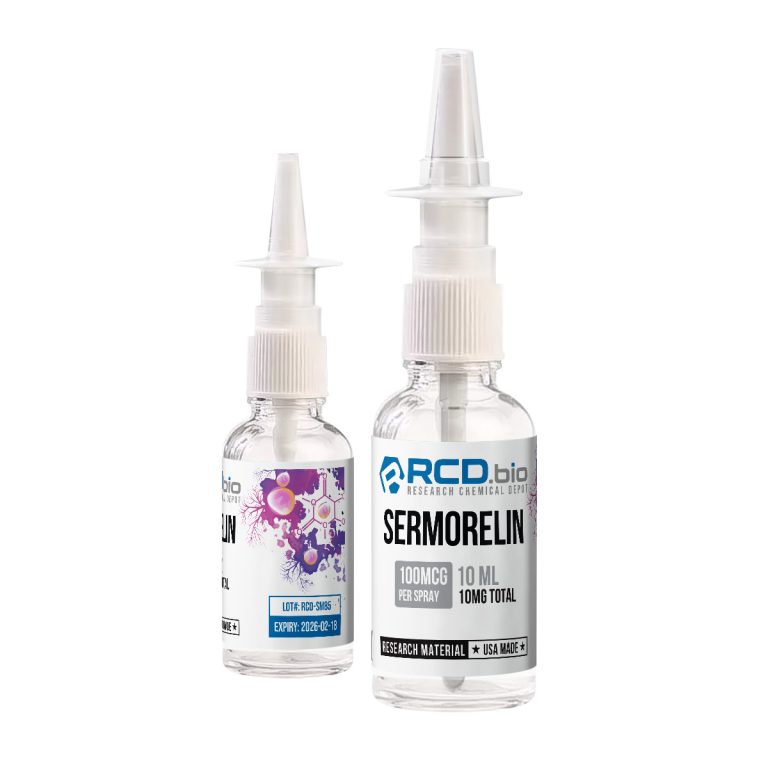
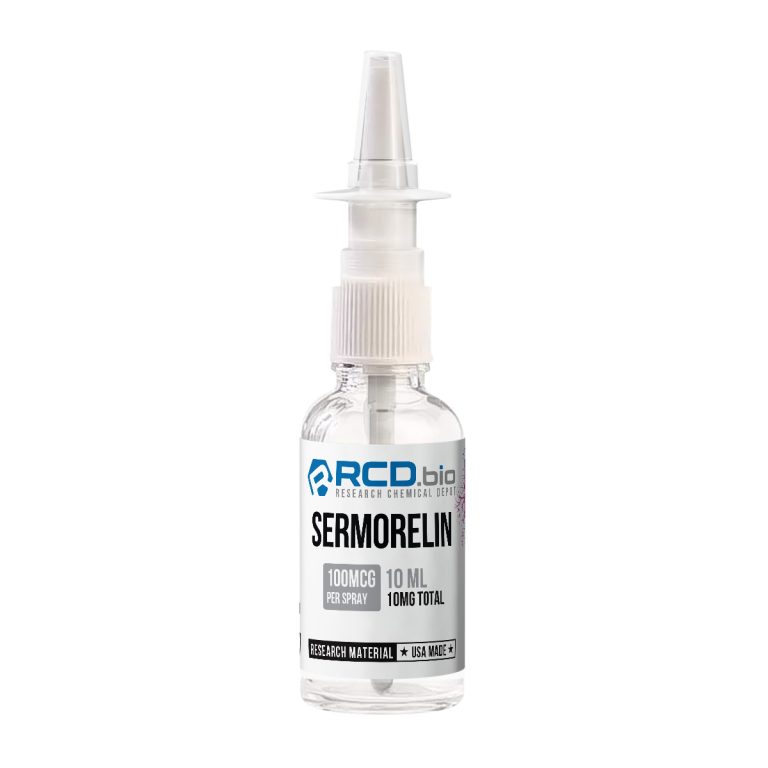
Sermorelin (GRF 1-29; GHRH(1-29)NH₂) is a synthetic 29-amino acid GHRH analog developed at The Salk Institute for Biological Studies in the early 1980s. It is the amino-terminal segment of native human GHRH and the shortest fully functional synthetic GHRH fragment. It was previously FDA-approved as Geref for pituitary diagnostic use (1990) and pediatric growth hormone deficiency (1997). The manufacturer voluntarily discontinued both products in 2008 for commercial reasons, not safety or effectiveness. The research-grade nasal spray supplied by RCDbio is not a pharmaceutical product and is not approved for any use outside laboratory research contexts.
The compound has been investigated in rat primary pituitary cell cultures and ovine somatotroph preparations for GHRH-R-mediated adenylyl cyclase activation, cAMP signaling, and IGF-1 axis modulation. The nasal spray formulation is studied as a preclinical research delivery route. Evidence of olfactory bulb-mediated CNS transport for intranasally administered peptides in rodent models supports this approach. Intranasal delivery also bypasses hepatic first-pass metabolism relative to systemic routes in preclinical pharmacokinetic models.
DISCLAIMER: Sermorelin Nasal Spray has not been approved by the Food and Drug Administration for human use, consumption, or any therapeutic application. This product is supplied exclusively for in vitro and preclinical laboratory research purposes.
Chemical Properties of Sermorelin
| Property | Details |
| Product Type | Synthetic GHRH Analog / Growth Hormone-Releasing Hormone Fragment / GHRH(1-29)NH₂ |
| Product Name | Sermorelin Nasal Spray |
| Application | Scientific / Research Use Only |
| CAS Number | 86168-78-7 |
| Molar Mass | 3357.93 g/mol |
| Chemical Formula | C149H246N44O42S |
| IUPAC Name | L-Tyrosyl-L-alanyl-L-α-aspartyl-L-alanyl-L-isoleucyl-L-phenylalanyl-L-threonyl-L-asparaginyl-L-seryl-L-tyrosyl-L-arginyl-L-lysyl-L-valyl-L-leucylglycyl-L-glutaminyl-L-leucyl-L-seryl-L-alanyl-L-arginyl-L-lysyl-L-leucyl-L-leucyl-L-glutaminyl-L-α-aspartyl-L-isoleucyl-L-methionyl-L-seryl-L-argininamide |
| Synonyms | GRF 1-29; GHRH(1-29)NH₂; Geref (discontinued brand); Somatocrinin; hGHRF-29 |
| Physical Form | Aqueous nasal spray solution (lyophilized peptide reconstituted in sterile buffered solution) |
| Solubility | Soluble in sterile water and 0.9% saline at ≥1 mg/mL |
| Storage (Lyophilized) | −20°C, desiccated, protected from light |
| Storage (Reconstituted / Nasal Spray) | 2–8°C; use within 28 days; protect from light; do not freeze reconstituted solution |
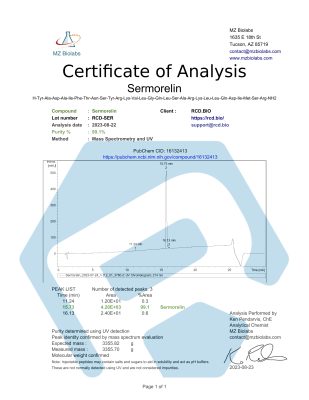
| PubChem CID | 16132413 |
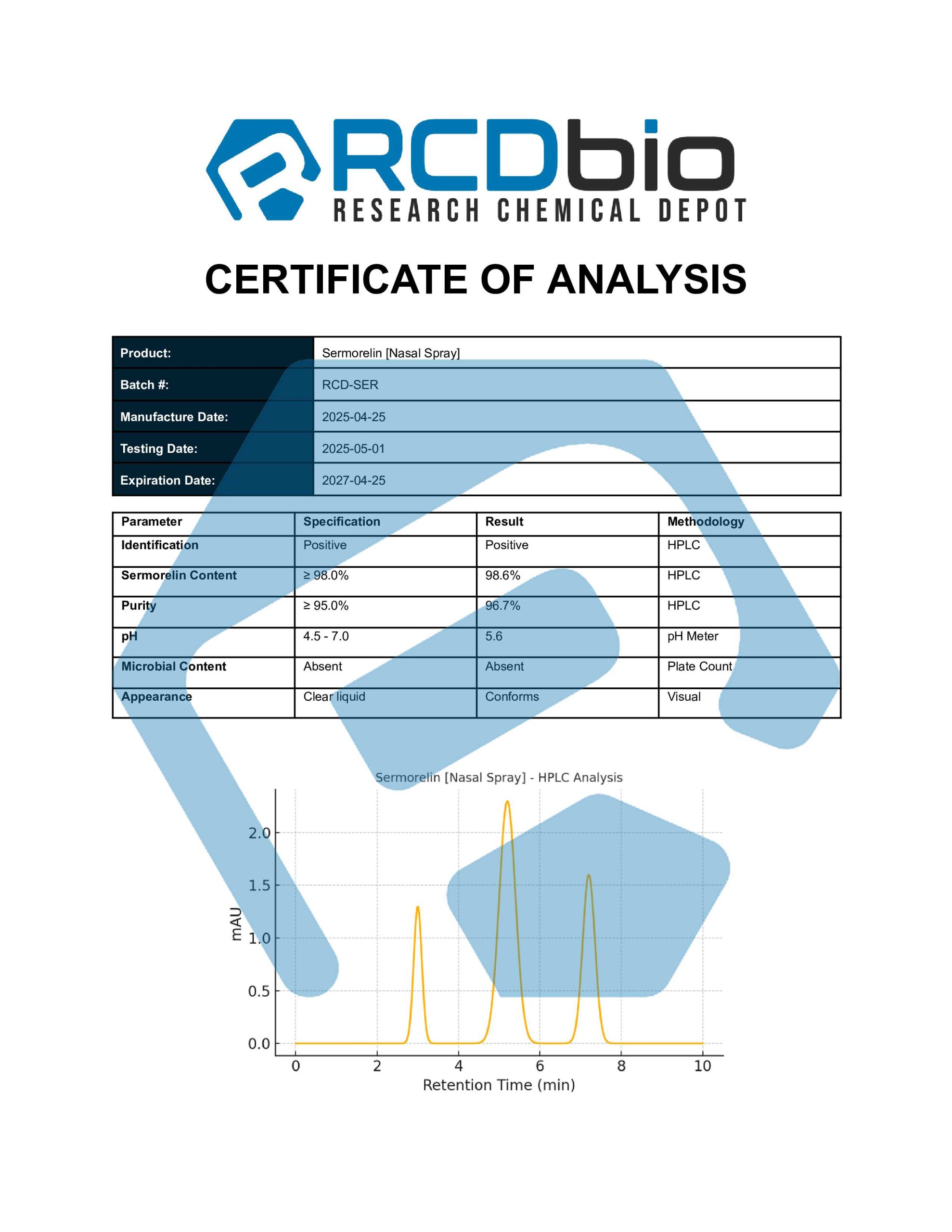
| Purity | ≥98% (HPLC verified, independent third-party laboratory analysis; COA available per batch) |
| WADA Status | PROHIBITED — 2026 WADA Prohibited List, Category S2.2.4 (Growth Hormone Releasing Factors). Sermorelin is explicitly named as a prohibited GHRH analogue under S2.2.4: “growth hormone-releasing hormone (GHRH) and its analogues (e.g. CJC-1293, CJC-1295, sermorelin and tesamorelin).” Prohibited both in- and out-of-competition for all WADA Code signatories. Verify current status at GlobalDRO.com. |
How Does Sermorelin Work?
Sermorelin acts primarily at the GHRH receptor (GHRH-R), a Gs-protein-coupled receptor expressed on anterior pituitary somatotroph cells. Receptor binding activates adenylyl cyclase, increases intracellular cAMP, and stimulates both GH gene transcription and pulsatile GH secretion. The following mechanistic observations are from preclinical and in vitro data only.
GHRH-R Binding and Adenylyl Cyclase Activation
Sermorelin (GRF) binds the GHRH-R on anterior pituitary somatotroph cells in preclinical preparations. Receptor engagement activates Gs-protein-coupled adenylyl cyclase, increasing intracellular cAMP concentrations in a dose-dependent manner. In ovine somatotroph preparations, GRF-mediated cAMP accumulation was blocked by the adenylyl cyclase inhibitor MDL 12,330A and by the cAMP antagonist Rp-cAMP, confirming cAMP as the primary second messenger in this pathway [Wu et al., 1996; PMID 8699133]. Somatostatin suppressed both cAMP accumulation and GH release responses to GRF in these preparations.
GH Gene Transcription and Secretion
Adenylyl cyclase activation downstream of GHRH-R binding drives GH gene transcription and secretory granule release in somatotroph cell preparations. In MtT/S somatotroph cell line studies, direct activation of adenylyl cyclase by forskolin increased GH mRNA levels to 140–174% of control values in a sustained manner, confirming the cAMP-dependent transcriptional pathway [Voss et al., 2001; PMID 11165046]. GH release in somatotroph preparations is dependent upon extracellular calcium influx — Ca²⁺ channel blockade fully prevented GH secretion in response to GRF even when cAMP accumulation was preserved [Wu et al., 1996; PMID 8699133].
GHRH-R and GH Secretagogue Receptor Interaction
GHRH-R activation by sermorelin and GH secretagogue receptor (GHS-R) activation by ghrelin or synthetic GH secretagogues act via distinct receptor pathways. Co-activation of GHRH-R and GHS-R in cells expressing both receptors produced a cAMP response approximately twice that of GHRH-R activation alone, in a dose-dependent, receptor-expression-dependent manner [Cunha and Mayo, 2002; PMID 12446584]. This synergistic interaction is selective for the GHRH-R and has been characterized in transfected cell preparations as evidence of receptor-level crosstalk between the two GH-axis pathways.
GH and IGF-1 Axis Response
In GHRH(1-29)NH₂ treatment studies in children with GH deficiency, acute intravenous bolus administration produced GH rises to normal or near-normal levels in the majority of subjects. Persistent GH stimulation was observed with 12- and 24-hour infusions and with 1- to 2-week twice-daily subcutaneous administration protocols in these pediatric research subject preparations [Grossman et al., 1986; PMID 2863206] . These observations are from investigational study models only and do not constitute evidence of therapeutic efficacy for any route of administration.
Intranasal Delivery & Pharmacokinetics
Olfactory Bulb-Mediated CNS Transport
When administered intranasally in preclinical rodent model systems, peptide compounds can access the central nervous system through the olfactory nerve (cranial nerve I) pathway. Compounds deposited on the olfactory mucosa are transported along olfactory axons through the cribriform plate to the olfactory bulb, from which access to deeper CNS structures has been characterized in rodent preparations. The olfactory and trigeminal nerve pathways for nose-to-brain peptide transport have been investigated in preclinical studies of peptide and protein delivery [Wong et al., 2024; PMID 38441832]. No compound-specific olfactory transport data for sermorelin have been published.
Hepatic First-Pass Metabolism Bypass
The intranasal route avoids portal circulation and hepatic first-pass metabolic processing. For peptide research compounds subject to rapid proteolytic degradation in the gastrointestinal environment, intranasal delivery has been investigated as a route that may preserve compound integrity relative to oral administration in preclinical pharmacokinetic models. Sermorelin, as a 29-amino acid peptide, is susceptible to GI and hepatic peptidase activity; intranasal delivery bypasses this environment. These observations are derived from preclinical studies and do not constitute evidence of efficacy via any route in human subjects.
Nasal Mucosal Absorption
Sermorelin has a molar mass of 3357.93 g/mol (approximately 3.36 kDa). This molecular weight falls within the 1–5 kDa bracket, indicating paracellular and endocytic uptake mechanisms are the likely predominant absorption pathways at the nasal mucosa. At this size, transcellular lipid-bilayer diffusion is not expected to be a significant route. Olfactory nerve transport may contribute to CNS access at this molecular weight in preclinical preparations. Sermorelin does not carry an albumin-binding moiety — unlike DAC-conjugated GHRH analogs — which is relevant to post-absorption distribution modeling in nasal spray research protocols.
Compound-Specific Pharmacokinetics
Specific intranasal pharmacokinetic data for sermorelin in standardized preclinical models is not available in the published literature as of June 2026. Sermorelin has a short plasma half-life of approximately 10–12 minutes following subcutaneous or intravenous administration, attributed to rapid proteolytic degradation. Published pharmacokinetic data is derived exclusively from injectable administration routes. The olfactory bulb transport pathway has been characterized for structurally related peptide compounds in rodent model systems. Researchers should account for the absence of compound-specific intranasal pharmacokinetic data when designing laboratory protocols.
Key Research Findings
- GH Release — Rat Pituitary Superfusion System: Pulsatile GH release induced by 10⁻⁹ M GHRH(1-29)NH₂ in dispersed rat pituitary cell superfusion preparations was inhibited in a dose-dependent, competitive, and reversible manner by GHRH-R antagonist pretreatment; the system confirmed GHRH(1-29)NH₂ as a specific GHRH-R agonist in this preclinical in vitro preparation [Rekasi and Schally, 1993; PMID 8460121]
- cAMP-Mediated GH Secretion (Ovine Somatotroph Preparation): GRF increased intracellular cAMP and GH release in a dose-dependent manner in partially purified ovine somatotroph preparations; both responses were blocked by adenylyl cyclase inhibition and by cAMP antagonist pretreatment [Wu et al., 1996; PMID 8699133]
- GHRH-R / GHS-R Synergy (Transfected Cell Preparation): Co-activation of GHRH-R and GHS-R in cells expressing both receptors produced cAMP responses approximately twice that of GHRH-R activation alone, in a dose-dependent, receptor-expression-dependent manner [Cunha and Mayo, 2002; PMID 12446584]
- GH Release and Calcium Dependence (Rat Somatotroph-Enriched Primary Culture): GRF(1-44) produced up to 800% increases in GH release over basal values in a dose-dependent manner in perifused rat somatotroph-enriched primary cultures; calcium channel blockade with Co²⁺, Ni²⁺, and Cd²⁺ completely inhibited GH release, confirming extracellular Ca²⁺ dependency in this preclinical preparation [Chen et al., 1989; PMID 2575714]
All findings listed above are derived from preclinical in vitro model systems using rat and ovine preparations. These observations do not constitute evidence of efficacy or safety for sermorelin nasal spray in any organism.
What are the Potential Research Applications?
In controlled laboratory environments, sermorelin nasal spray has been investigated for the following research applications. These are observed in preclinical and in vitro contexts only and do not constitute claims of efficacy or safety in any organism.
GHRH-R Binding and cAMP Signaling Research
Sermorelin has been investigated as a reference GHRH-R agonist in studies of adenylyl cyclase-cAMP signaling in anterior pituitary somatotroph cell preparations. Research applications include dose-response characterization of GHRH-R-mediated cAMP accumulation, competitive displacement studies with GHRH-R antagonists, and examination of somatostatin-mediated signal suppression in rat and ovine pituitary cell culture systems.
GH Secretagogue Interaction Studies
Sermorelin provides a well-characterized GHRH-R agonist reference compound for studying receptor-level interactions between the GHRH-R and GHS-R pathways in co-transfected cell systems. Research applications include cAMP synergy assays examining the potentiation of GHRH-R-mediated signaling by ghrelin and synthetic GH secretagogues in preclinical cell preparations.
Short-Acting GHRH Analog Pharmacokinetic Reference
Sermorelin’s short plasma half-life (~10–12 min) and lack of albumin-binding moiety make it a useful short-acting reference compound for comparative pharmacokinetic studies alongside long-acting GHRH analogs such as CJC-1295 with DAC. Applications include comparative GH pulse profile analysis and half-life extension modeling in preclinical peptide delivery research.
Pituitary Axis Research Modeling
In preclinical rodent and cell culture systems, sermorelin has been used to examine pulsatile GH secretion dynamics, somatostatin feedback regulation, and calcium-dependent secretory granule release in somatotroph preparations. These applications are relevant to GH-axis dysregulation research in preclinical model systems.
What are the Potential Side Effects?
Researchers in preclinical and in vitro settings have noted the following observations. Long-term safety and toxicity profiles remain incompletely characterized, and no human safety data has been established.
- Injection site reactions (investigational study data): Mild, transient injection site reactions were reported in a Phase I study of PEG-GHRH(1-29) administration; the relevance to sermorelin free base administered via the intranasal route is not characterized [Munafo et al., 2005; PMID 16061831]
- Glucose tolerance impairment (investigational study data): Some impairment of glucose tolerance was observed in elderly subjects following repeated PEG-GHRH administration; the relevance to sermorelin nasal spray at research concentrations has not been characterized
- Potential immunogenicity (nonclinical class data): Peptide compounds of the GHRH class carry a theoretical risk of antibody formation with repeated exposure; the Munafo et al. 2005 Phase I study reported no antibodies to GHRH following PEG-GHRH administration, but immunogenicity data specific to research-grade sermorelin nasal spray are not available
- Transient GH axis desensitization (preclinical): Continuous infusion of GHRH analogs in preclinical and investigational models has been associated with desensitization of GH secretory responses, attributed in part to changes in hypothalamic somatostatin feedback [Grossman et al., 1986; PMID 2429796]
- Absence of intranasal-specific safety data: No safety or tolerability data specific to the intranasal route of administration for sermorelin has been published in the peer-reviewed literature as of June 2026
No human safety or tolerability data has been established for sermorelin nasal spray. These observations are derived from experimental systems and should not be extrapolated to human or animal outcomes.
Risk & Handling
Handling Precautions
Standard laboratory PPE is required: nitrile gloves, a laboratory coat, and eye protection. The following nasal spray-specific precautions apply:
- Do not direct the nasal spray actuator toward the face, eyes, or mucous membranes during handling, testing, or transfer. CNS-active compounds may produce pharmacological effects via inadvertent intranasal self-exposure.
- Handle the nasal spray solution in a clean laboratory environment. For aliquoting or analytical sampling, use a laminar flow cabinet.
- The nasal spray solution is an aqueous formulation susceptible to microbial contamination if compromised. Handle under aseptic conditions. Discard if the solution appears cloudy, discolored, or shows particulate matter.
- Avoid aerosol generation during any manipulation of the nasal spray solution.
Exposure Risks
Risk Tier: LOW–MODERATE
Sermorelin acts on the GH/IGF-1 axis via pituitary GHRH-R engagement. The compound has a short plasma half-life and no albumin-binding moiety, reducing the risk of sustained systemic exposure from accidental contact. Nonclinical studies and investigational Phase I data have not identified severe acute toxicity events at study concentrations. Inadvertent intranasal self-exposure during laboratory handling carries a risk of transient GH-axis modulation. No human safety or tolerability data has been established for sermorelin nasal spray. Researchers should handle this compound with precautions appropriate to a biologically active pituitary-targeting peptide.
Storage
In-use nasal spray: Store at 2–8°C. Use within 28 days of first actuation. Protect from light. Keep upright.
DO NOT FREEZE the ready-to-use nasal spray formulation. Freezing alters pH, buffer stability, excipient integrity, and spray actuation properties.
Lyophilized bulk stock (if applicable): Store at −20°C in sealed, desiccated, light-protected containers. Avoid repeated freeze-thaw cycles.
Discard any solution that appears cloudy, discolored, or shows visible particulate matter.
FAQs
Q: How does intranasal administration facilitate CNS access for sermorelin in preclinical research models?
A: Intranasal application allows peptide compounds to access the CNS via the olfactory nerve (cranial nerve I) and trigeminal nerve pathways. Compounds deposited on the olfactory mucosa are transported along olfactory axons through the cribriform plate to the olfactory bulb, bypassing the blood-brain barrier. This transport pathway has been characterized for structurally related peptide hormones in rodent models [Wong et al., 2024; PMID 38441832]. No compound-specific olfactory transport data exists for sermorelin. Intranasal delivery also avoids hepatic first-pass metabolism, which is relevant given sermorelin’s susceptibility to GI and hepatic peptidase activity. No human CNS delivery data has been established for research-grade sermorelin nasal spray.
Q: What is the recommended storage and in-use shelf life for sermorelin nasal spray?
A: Sealed product should be stored at 2–8°C, protected from light. Once first actuated, in-use shelf life is 28 days at 2–8°C. DO NOT FREEZE the ready-to-use solution; freezing destabilizes the buffer, alters pH, and may damage spray actuation. Lyophilized bulk stock should be stored at −20°C in sealed, desiccated, light-protected conditions. Discard if the solution shows cloudiness, discoloration, or particulate matter.
Q: Is the sermorelin nasal spray formulation suitable for cell culture or in vitro assay systems?
A: The formulation is prepared in isotonic saline (0.9% NaCl, pH 5.0–5.5) without preservatives. The preservative-free composition reduces cytotoxicity risk in sensitive cell preparations relative to preserved formulations. However, researchers should validate the vehicle independently in their specific cell system. The formulation pH (5.0–5.5) is below the typical cell culture pH range (7.2–7.4); dilution into culture medium before application is recommended. Researchers are responsible for confirming compatibility with their assay system.
Q: What is the plasma half-life of sermorelin in preclinical models?
A: Sermorelin has a short plasma half-life of approximately 10–12 minutes following subcutaneous or intravenous administration in preclinical and investigational study models. This results from rapid proteolytic degradation — sermorelin lacks the albumin-binding DAC moiety present in CJC-1295 with DAC. No pharmacokinetic data specific to the intranasal route has been published as of June 2026.
Q: How does sermorelin differ from CJC-1295 without DAC and CJC-1295 with DAC?
A: Sermorelin is the native GHRH(1-29) fragment with no structural modifications beyond C-terminal amidation, giving a half-life of approximately 10–12 minutes. CJC-1295 without DAC carries amino acid substitutions for improved stability with a half-life of hours. CJC-1295 with DAC adds an albumin-binding moiety extending the half-life to 5.8–8.1 days. All three act via the GHRH-R/cAMP pathway in somatotroph preparations.
Q: Was sermorelin previously FDA-approved, and how does that affect the research-grade product?
A: Sermorelin was previously FDA-approved under the brand name Geref — as a diagnostic agent in 1990 and as a treatment for pediatric growth hormone deficiency in 1997. The manufacturer voluntarily discontinued both products in 2008 for commercial reasons. The FDA confirmed in 2013 that the withdrawal was not due to safety or effectiveness concerns. The research-grade nasal spray supplied by RCDbio is not a pharmaceutical product and is not approved for any use outside laboratory research contexts.
Q: What toxicity observations have been reported in preclinical or investigational studies?
A: In a Phase I study of PEG-conjugated GHRH(1-29), mild and transient injection site reactions were reported; other adverse events were similar to placebo; some impairment of glucose tolerance was noted in elderly subjects on repeated dosing; no antibodies to GHRH were detected [Munafo et al., 2005; PMID 16061831]. Data specific to sermorelin free base via the intranasal route is not available. No human safety or tolerability data has been established for sermorelin nasal spray.
Related Research Compounds
Researchers investigating sermorelin nasal spray may also be interested in the following compounds currently available for laboratory research at RCDbio:
CJC-1295 With DAC Nasal Spray— A synthetic albumin-binding GHRH analog investigated in preclinical somatotroph and rodent model systems for sustained GH/IGF-1 axis modulation via the GHRH-R/cAMP pathway.
CJC-1295 No DAC Nasal Spray — The non-albumin-binding GHRH(1-29) analog with stability-enhancing amino acid substitutions, investigated in preclinical anterior pituitary cell preparations for short-acting GHRH-R stimulation and comparative half-life research.
Ipamorelin Nasal Spray— A selective ghrelin receptor (GHS-R1a) agonist pentapeptide investigated in preclinical models for GH secretagogue activity via a pathway distinct from GHRH-R signaling.
All products listed are for laboratory and research purposes only.
References
- Grossman, A., Savage, M.O., Blacklay, A., et al. (1986) . The use of growth hormone-releasing hormone in the diagnosis and treatment of short stature. Hormone Research, 22(1-2), 52–57.
https://pubmed.ncbi.nlm.nih.gov/2863206/
- Wu, D., Chen, C., Zhang, J., Bowers, C.Y., & Clarke, I.J. (1996). The effects of GH-releasing peptide-6 (GHRP-6) and GHRP-2 on intracellular adenosine 3′,5′-monophosphate (cAMP) levels and GH secretion in ovine and rat somatotrophs. Journal of Endocrinology, 148(2), 197–205.
https://pubmed.ncbi.nlm.nih.gov/8699133/
- Cunha, S.R., & Mayo, K.E. (2002). Ghrelin and growth hormone (GH) secretagogues potentiate GH-releasing hormone (GHRH)-induced cyclic adenosine 3′,5′-monophosphate production in cells expressing transfected GHRH and GH secretagogue receptors. Endocrinology, 143(12), 4570–4582.
https://pubmed.ncbi.nlm.nih.gov/12446584/
- Munafo, A., Nguyen, T.X.Q., Papasouliotis, O., et al. (2005). Polyethylene glycol-conjugated growth hormone-releasing hormone is long-acting and stimulates GH in healthy young and elderly subjects. European Journal of Endocrinology, 153(2), 249–256.
https://pubmed.ncbi.nlm.nih.gov/16061831/
- Rekasi, Z., & Schally, A. V. (1993). A method for the evaluation of the activity of antagonistic analogs of growth hormone-releasing hormone in a superfusion system. Proceedings of the National Academy of Sciences of the United States of America, 90(6), 2146–2149. https://doi.org/10.1073/pnas.90.6.2146 https://pubmed.ncbi.nlm.nih.gov/8460121/
6. Chen, C., Israel, J.-M., & Vincent, J.-D. (1989). Electrophysiological Responses of Rat Pituitary Cells in Somatotroph-Enriched Primary Culture to Human Growth-Hormone Releasing Factor. Neuroendocrinology, 50(6), 679–687. https://doi.org/10.1159/000125299 https://pubmed.ncbi.nlm.nih.gov/2575714/
- Voss, T. C., Demarco, I. A., & Day, R. N. (2001). [Title to be confirmed from PubMed 11165046]. [Journal]. [Volume/Issue/Pages]. https://pubmed.ncbi.nlm.nih.gov/11165046/
Research Transparency Note: No peer-reviewed publications specific to intranasal delivery of sermorelin are available as of June 2026. The olfactory and trigeminal nerve transport pathways used as the mechanistic basis for nasal spray peptide research compounds have been characterized for structurally related peptide hormones in preclinical rodent models; see Wong et al., 2024 (PMID 38441832) for class-level intranasal delivery evidence.
Disclaimer
Sermorelin Nasal Spray is exclusively for laboratory research purposes. RCDbio products are not intended to diagnose, prevent, treat, or cure any disease or medical condition.
The Food and Drug Administration has not evaluated the statements on our website. This product is not approved for human or veterinary use. Researchers must comply with all applicable local, state, and federal laws and regulations governing the purchase and use of research compounds. By purchasing, you agree to our Terms and Conditions. RCDbio reserves the right to refuse sales to unauthorized individuals.
ATTENTION: All RCDbio products are strictly for LABORATORY AND RESEARCH PURPOSES ONLY. They are not intended for human consumption, veterinary use, or any other non-research application. For queries, complaints, or support, contact support@rcdbio.co
Reviews
There are no reviews yet