

Description
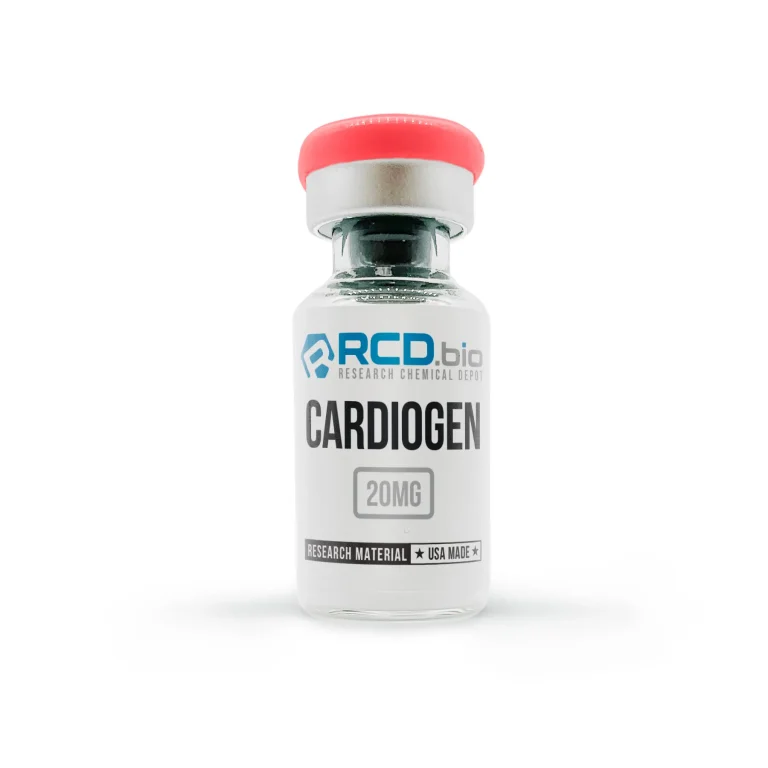
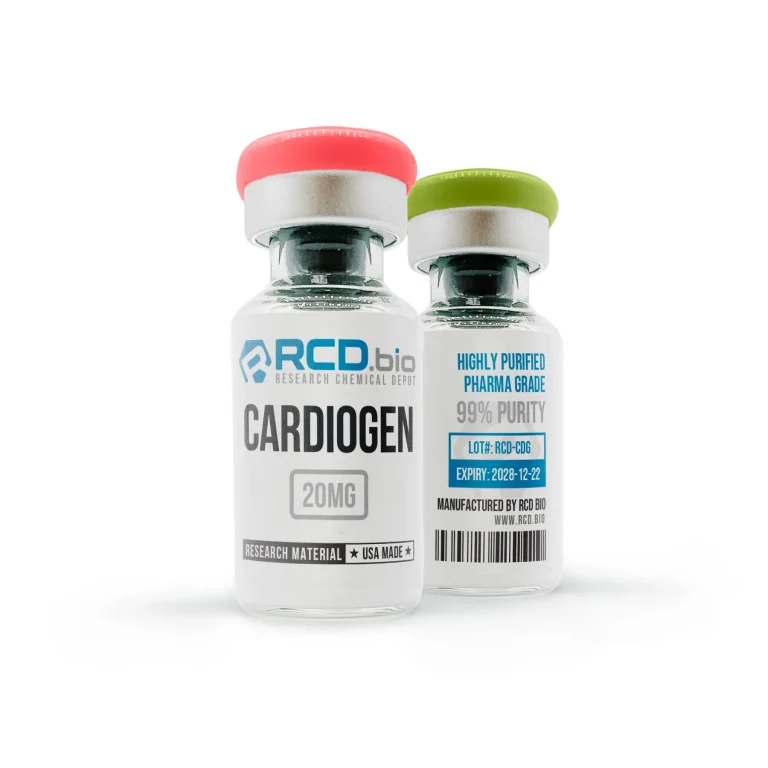
Cardiogen 20mg (AEDR) Research-Grade Peptide
Disclaimer: Cardiogen (AEDR) is not approved by the U.S. Food and Drug Administration (FDA) for human or veterinary use. It is intended strictly for laboratory and research purposes only.
What is Cardiogen Peptide?
Cardiogen is a synthetic tetrapeptide with the amino acid sequence H-Ala-Glu-Asp-Arg-OH (AEDR). It belongs to the family of short bioregulator peptides and is classified in research literature as a cardiovascular tissue-specific peptide. It is studied in experimental settings for its proposed interactions with cardiac fibroblasts and cardiomyocyte-associated signaling pathways. Cardiogen is not an approved therapeutic compound and is intended exclusively for qualified researchers in controlled laboratory environments.
Properties of Cardiogen
| Property | Details |
| CAS Number | 857267-11-9 |
| Molar Mass | 489.5 g/mol |
| Chemical Formula | C18H31N7O9 |
| Stability/ Shelf life | 24 months when stored lyophilized at −20 °C under recommended conditions |
| Synonyms | Cardiogen, AEDR peptide, Alanyl-Glutamyl-Aspartyl-Arginine |
| Storage Instructions | −20 °C (lyophilized); protect from light, heat, and moisture |
| Amino Acid Sequence | H-Ala-Glu-Asp-Arg-OH |
| WADA Status | Not explicitly listed on the WADA 2026 Prohibited List |
How Does Cardiogen Peptide Work?
Cardiogen is thought to act as a gene-level bioregulator in experimental models. Based on articles retrieved from PubMed, short peptides of this class are associated with the ability to penetrate cell nuclei and interact with nucleosomal structures, histone proteins, and double-stranded DNA, potentially influencing transcription and gene expression patterns.
In cardiac-relevant experimental models, Cardiogen is thought to influence:
- Cardiomyocyte proliferation-associated signaling, observed in myocardial tissue culture models from young and aged rats
- Apoptotic pathway modulation, proposed to occur through the downregulation of p53 protein expression in cardiac cell models
- Fibroblast behavior regulation, associated with the modulation of extracellular matrix components, including collagen and elastin synthesis in preclinical models
- Cytoskeletal and nuclear matrix protein synthesis, including upregulation of lamin A, lamin C, actin, vimentin, and tubulin in fibroblast experimental systems
- Endonuclease-mediated DNA hydrolysis regulation has been investigated in preclinical models. Published data from Khavinson et al. (2011) demonstrate site-specific DNA binding by short Khavinson peptides that modulates eukaryotic endonuclease activity, suggesting a dual mechanism involving both DNA interaction and enzyme-level regulation in experimental systems. [Khavinson et al., 2011]
All mechanistic findings are derived from in vitro and preclinical animal models only. Receptor pharmacology data in human systems remain absent. Data should be interpreted with caution, as findings are preliminary and not consistent across all experimental models.
What are the Potential Research Observations of Cardiogen Peptide?
The following research findings are based on articles retrieved from PubMed and are reported from preclinical and in vitro studies only. These findings do not constitute clinical evidence.
Tumor Cell Apoptosis Observations in Sarcoma Models
The tumor-modifying effect of Cardiogen was studied in rats with transplanted M-1 sarcoma. Cardiogen injections were associated with increased tumor cell apoptosis across all experimental groups. Dose-dependent inhibition of sarcoma growth was observed, linked to hemorrhagic necrosis development. Inhibition of tumor growth did not appear to result from direct cytostatic effects. A specific mechanism operating through the tumor’s vascular network was proposed by the authors. Findings are from a rat experimental model and have not been replicated in human clinical studies.
AEDR Tetrapeptide and Cardiovascular Senescence-Associated Secretory Phenotype
Cardiogen was identified in a review of vasoprotective peptides as a potential regulator of inflammaging and SASP in cardiovascular cells. SASP in these cells involves changes in anti-proliferative proteins (p16, p21, p53), cytokines (IL-1, IL-6, TNF-α, NF-κB), and matrix metalloproteinases. AEDR was reported to potentially regulate SASP-forming molecule synthesis in cardiovascular cell models. Data are from a review of preclinical literature and do not constitute clinical evidence.
Note: AEDR is referenced among multiple vasoprotective peptides in this review. The finding is associative and not derived from a Cardiogen-specific experimental study.
Cardiogen (AEDR) is not approved by the U.S. Food and Drug Administration (FDA) for human or veterinary use. It has no approved therapeutic indications. This compound is intended strictly for scientific research purposes only.
Safety Profile and Toxicological Considerations
Researchers have noted the following observations in experimental settings. Long-term safety data remain absent, and a complete toxicity profile has not been established in any biological system.
- No LD50 or chronic toxicity data are available in peer-reviewed literature for Cardiogen
- No human safety profile exists for this compound; systemic effects of inadvertent exposure are not established
- Cardiogen is susceptible to degradation in aqueous solutions; reconstituted solutions should be used promptly
- Repeated freeze-thaw cycles are associated with reduced peptide integrity and analytical reliability
- Receptor pharmacology and pharmacokinetic profiles in human systems remain absent and poorly characterized
- Potential interference with p53-mediated apoptotic pathways and extracellular matrix signaling outside targeted experimental contexts cannot be excluded
Any clinical research initiatives must be conducted under the guidance of the relevant Institutional Review Board (IRB). Preclinical research involving animals must comply with IACUC directives under the Animal Welfare Act (AWA).
Why Choose RCDbio for Cardiogen?
Each batch of Cardiogen (AEDR) supplied by RCDbio undergoes independent third-party laboratory testing, with a batch-specific Certificate of Analysis (COA) available for researcher verification before experimental use.
- Independent third-party laboratory testing per batch
- COA confirming compound identity and purity per lot
- Molecular identity confirmed against CAS 857267-11-9
- RCDbio does not self-certify; all quality verification is conducted by accredited independent laboratories
Disclosure: Sponsored by RCDbio. This content is for informational purposes only and does not constitute an endorsement of any product for human use.
FREQUENTLY ASKED QUESTIONS
Is Cardiogen approved for human use?
No. Cardiogen (AEDR) is not approved by the FDA for any human or medical application. It is classified as a research-use peptide only and has no approved therapeutic indications in the United States or any other regulatory jurisdiction.
What is the amino acid sequence of Cardiogen?
Cardiogen is a tetrapeptide with the sequence H-Ala-Glu-Asp-Arg-OH (AEDR), composed of four amino acids: alanine, glutamic acid, aspartic acid, and arginine. It is synthesized using solid-phase peptide synthesis methods.
What cellular targets does Cardiogen propose to interact with in research models?
In preclinical experimental models, Cardiogen is proposed to primarily target cardiac fibroblasts and cardiomyocyte-associated signaling pathways. It is thought to modulate extracellular matrix protein synthesis, apoptotic markers, and gene expression patterns in these cell types. All findings are from in vitro and animal models only.
How should Cardiogen be stored in a laboratory setting?
Lyophilized Cardiogen should be stored at −20 °C in a dry, dark environment, away from heat, moisture, and light. Reconstituted peptide solutions should be used promptly following validated laboratory protocols. Repeated freeze-thaw cycles should be avoided to maintain peptide integrity.
What is the shelf life of Cardiogen peptide?
When stored lyophilized at −20 °C under recommended conditions, Cardiogen peptide is estimated to remain stable for up to 24 months.
References
Levdik, N. V., & Knyazkin, I. V. (2009). Tumor-modifying effect of cardiogen peptide on M-1 sarcoma in senescent rats. Bulletin of Experimental Biology and Medicine, 148(3), 433–436. https://doi.org/10.1007/s10517-010-0730-9
Khavinson, V., Linkova, N., Dyatlova, A., Kantemirova, R., & Kozlov, K. (2022). Senescence-Associated Secretory Phenotype of Cardiovascular System Cells and Inflammaging: Perspectives of Peptide Regulation. Cells, 12(1), 106. https://doi.org/10.3390/cells12010106
Disclaimer
Cardiogen (AEDR) is exclusively for laboratory research purposes. RCDbio products are not intended to diagnose, prevent, treat, or cure any disease or medical condition. The Food and Drug Administration has not evaluated the statements on this page. Researchers must comply with all applicable local laws and regulations governing the use of research compounds. Any clinical research initiatives must be conducted under the guidance of the relevant Institutional Review Board (IRB). Preclinical research involving animals must comply with IACUC directives under the Animal Welfare Act (AWA). By purchasing, you agree to RCDbio Terms and Conditions. RCDbio reserves the right to refuse sales to unauthorized individuals.
Reviews
There are no reviews yet