

Description
What is EPO (Erythropoietin)?
Erythropoietin (EPO) is a 165-amino-acid glycoprotein hormone and cytokine that functions as the primary endogenous regulator of erythropoiesis — the process by which erythroid progenitor cells in the bone marrow proliferate, differentiate, and mature into circulating red blood cells. Structurally, EPO is characterized by four alpha-helical bundles and a complex carbohydrate architecture, with three N-linked glycosylation sites (asparagine residues at positions 24, 38, and 83) and one O-linked glycosylation site (serine at position 126). Carbohydrate content accounts for approximately 39–40% of the total molecular mass, contributing critically to both circulatory half-life and in vivo receptor-binding competency.
In vertebrate biology, EPO is synthesized predominantly in the peritubular interstitial fibroblasts of the renal cortex under conditions of cellular hypoxia, where stabilization of Hypoxia-Inducible Factor-1alpha (HIF-1alpha) drives transcriptional upregulation of the EPO gene located on chromosome 7q11–22. During fetal development, hepatic stellate cells (Ito cells) and a subset of hepatocytes serve as the primary EPO-producing population, with a developmental switch to renal production occurring perinatally.
In research settings, recombinant human EPO (rhEPO) has been widely employed as a pharmacological tool and reference protein for investigating erythropoietin receptor (EPOR) signaling dynamics, JAK2/STAT5 pathway activation, PI3K/Akt-mediated anti-apoptotic cascades, and hypoxia-adaptive transcriptional programs in hematopoietic and non-hematopoietic cell systems. In addition, EPO has been investigated in preclinical models for cytoprotective, neuroprotective, and angiogenic properties that extend beyond its canonical hematopoietic function.
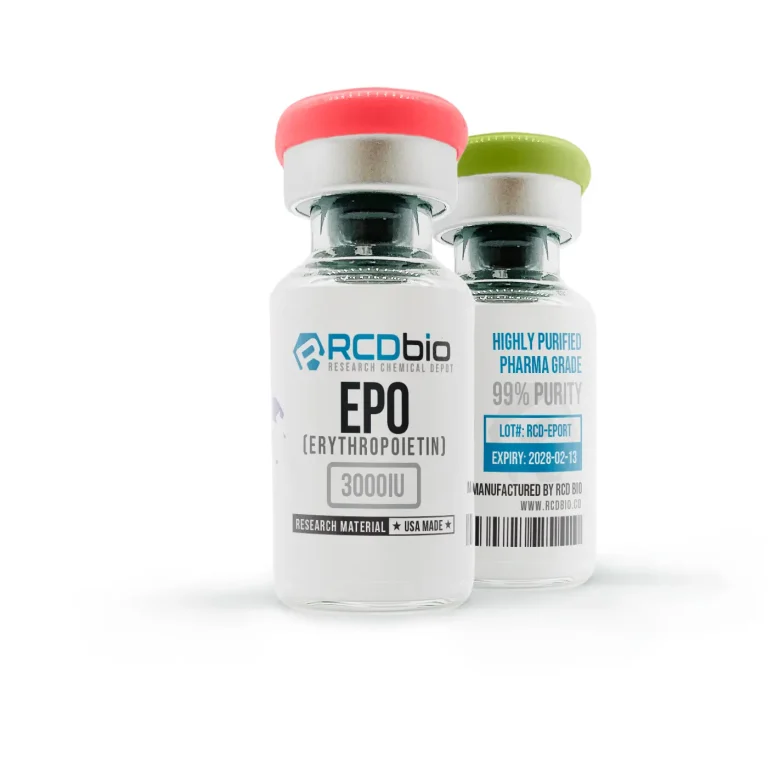
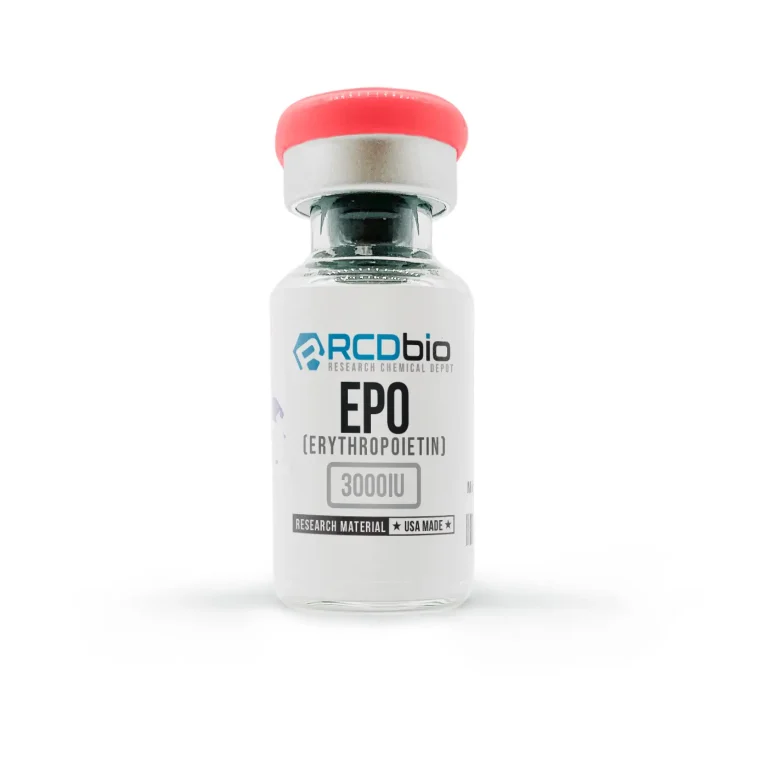
RCDbio’s research-grade EPO is supplied in lyophilized powder form in a sealed vial, intended strictly for laboratory and research purposes. It is not approved by the Food and Drug Administration for use in this research-grade, non-pharmaceutical form. While pharmaceutical-grade recombinant EPO preparations (epoetin alfa, epoetin beta) carry FDA approval for specific clinical indications, the research-grade lyophilized material supplied by RCDbio is a distinct product category. It is not a dietary supplement and is not intended for human consumption or therapeutic self-administration.
Chemical Properties
| Property | Detail |
| Product Type | Recombinant Human Glycoprotein Hormone / Hematopoietic Cytokine |
| Product Name | Erythropoietin (EPO); Epoetin |
| Application | Scientific / Research Use Only |
| CAS Number | 11096-26-7 (endogenous human EPO); 113427-24-0 (Epoetin alfa, recombinant) |
| Molar Mass | ~18,236 Da (protein backbone, unglycosylated); ~30,400 Da (fully glycosylated mature form) |
| Chemical Formula | Protein core: C₈₁₅H₁₂₈₇N₂₃₃O₂₄₁S₅ (approximate, backbone only; glycan content variable by production system) |
| Sequence | 165 amino acids (mature form); three N-linked glycosylation sites at Asn-24, Asn-38, Asn-83; one O-linked site at Ser-126; two disulfide bonds (Cys7–Cys161; Cys29–Cys33) |
| IUPAC Name | N/A — complex glycoprotein; full systematic IUPAC notation not available for post-translationally modified biologics; referenced by WHO INN “epoetin” |
| Synonyms | EPO; Hematopoietin; Haemopoietin; Erythropoetin; Epoetin alfa (pharmaceutical, Epogen/Procrit); Epoetin beta (pharmaceutical, NeoRecormon) |
| Physical Form | Lyophilized white to off-white powder |
| Solubility | Soluble in sterile phosphate-buffered saline (PBS, pH 7.4) and bacteriostatic water; carrier protein supplementation (0.1% BSA) recommended to minimize surface adsorption in vitro; avoid prolonged exposure to reducing conditions that may disrupt disulfide bonds |
| Storage (Lyophilized) | −20°C in sealed, light-protected container with desiccant; stable up to 24 months under recommended conditions |
| Storage (Reconstituted) | 4°C; use within 24–48 hours of reconstitution; avoid repeated freeze-thaw cycles; discard if turbidity or particulate matter is observed |
| PubChem CID | 51231594 (human EPO protein, UniProt P01588); compound-level CID varies by recombinant form — researchers should verify the specific CID for their production system at pubchem.ncbi.nlm.nih.gov |
| Purity | ≥98% (HPLC verified, independent third-party laboratory analysis; COA available per batch) |
| WADA Status | Explicitly prohibited at all times under WADA Prohibited List S2.1.1 (Erythropoietin-Receptor Agonists), within the S2 category of Peptide Hormones, Growth Factors, Related Substances and Mimetics. Classified as a non-specified substance. Researchers engaged in sport-adjacent studies should verify the current status at GlobalDRO.com before use. |
How Does EPO (Erythropoietin) Work?
EPO exerts its primary biological actions through binding to the erythropoietin receptor (EPOR), a transmembrane glycoprotein and member of the cytokine receptor superfamily. The EPOR exists as a preformed homodimer on the surface of erythroid progenitor cells, and EPO engagement induces a conformational rearrangement within this homodimeric complex that initiates intracellular signal transduction.
EPOR Binding and JAK2 Activation
EPO engages the EPOR homodimer through an asymmetric two-site interaction: a high-affinity binding site (site 1, nanomolar range) on the first receptor monomer followed by a lower-affinity interaction (site 2, micromolar range) on the second monomer. This sequential binding induces a conformational twist of the two EPOR monomers. Each EPOR monomer is constitutively associated with Janus kinase 2 (JAK2) via a box1/box2 cytoplasmic motif; receptor reorientation following EPO binding results in transphosphorylation and activation of JAK2. Activated JAK2 then phosphorylates multiple conserved tyrosine residues in the cytoplasmic tail of EPOR, generating docking sites for downstream signaling effectors with SH2 or phosphotyrosine-binding domains. These signaling events have been characterized in murine erythroid progenitor cell preparations and confirmed in isolated human burst-forming unit-erythroid (BFU-E) and colony-forming unit-erythroid (CFU-E) systems.
JAK2/STAT5 Signaling Cascade and Erythroid Gene Transcription
Signal transducer and activator of transcription 5 (STAT5) is the principal downstream effector of JAK2 in EPOR signaling. Upon recruitment to phosphotyrosine-343 on the EPOR cytoplasmic tail, STAT5 is phosphorylated by JAK2, undergoes homodimerization, and translocates to the nucleus, where it drives transcription of erythroid survival and differentiation genes. In murine genetic models, deletion of EPOR or JAK2 produces embryonic lethality between gestational days 13 and 15, coincident with the initiation of definitive erythropoiesis, underscoring the non-redundant role of the EPOR-JAK2-STAT5 axis in erythroid development. Constitutively active STAT5a constructs have been demonstrated in murine bone marrow transplantation models to rescue erythropoiesis in the complete absence of both EPOR and JAK2, establishing STAT5 as the critical downstream effector.
PI3K/Akt Anti-Apoptotic Signaling
In addition to JAK2/STAT5, EPOR activation recruits the p85 regulatory subunit of phosphatidylinositol 3-kinase (PI3K) via phosphotyrosine-479, initiating the PI3K/Akt (protein kinase B) signaling cascade. Akt phosphorylation promotes erythroid progenitor survival by inactivating pro-apoptotic factors and enabling continued erythroid differentiation under conditions where progenitor cell numbers must be expanded rapidly. This pathway has been characterized in isolated erythroid progenitor cell preparations and EPO-stimulated in vitro culture systems.
Ras/MAPK/ERK Pathway Activation
EPO also activates the Ras/mitogen-activated protein kinase (MAPK)/extracellular signal-regulated kinase (ERK1/2) cascade through adapter proteins recruited to the phosphorylated EPOR cytoplasmic domain. ERK1/2 phosphorylation in response to EPO stimulation has been documented in multiple erythroid cell line systems, including Friend erythroleukemia cells, UT-7 cells, and Rama 37 EpoR-transfected preparations. The precise contribution of this pathway to steady-state erythropoiesis in vivo remains less defined relative to the JAK2/STAT5 axis, with experimental findings suggesting a more prominent role during stress erythropoiesis.
HIF-1alpha/Oxygen-Sensing Regulation
EPO gene expression is regulated by Hypoxia-Inducible Factor-1alpha (HIF-1alpha), the central transcriptional mediator of the cellular hypoxic response. Under normoxic conditions, prolyl hydroxylase domain proteins (PHDs) hydroxylate HIF-1alpha, targeting it for proteasomal degradation via the von Hippel–Lindau (VHL) E3 ubiquitin ligase complex. Under hypoxic conditions, PHD activity is suppressed, HIF-1alpha accumulates, heterodimerizes with HIF-1beta, and the resulting HIF-1 complex drives EPO gene transcription through binding to a hypoxia response element (HRE) in the EPO gene 3′ enhancer region. This HIF-1alpha-dependent EPO induction has been characterized in primary renal peritubular fibroblast preparations, immortalized renal cell lines, and hepatocyte culture systems. EPO has also been shown in vitro to engage a feedback mechanism by upregulating PHD-2 expression in a dose-dependent manner, which may represent a regulatory limit on EPO-driven HIF-1alpha accumulation in non-hematopoietic cell systems.
Neuroprotective and Cytoprotective Mechanisms (Non-Hematopoietic)
Beyond hematopoiesis, EPOR expression has been characterized in neurons, astrocytes, oligodendrocytes, cardiomyocytes, and endothelial cell preparations. In in vitro models of hypoxia-ischemia using oxygen-glucose deprivation (OGD) of rat pheochromocytoma (PC-12) cells and primary mixed neuronal/astrocytic cultures, rhEPO application has been associated with reduced programmed cell death, decreased reactive oxygen species formation, and suppression of matrix metalloproteinase-9 (MMP-9) activity. Astrocytes in mixed culture systems have been identified as the primary cell type producing EPO in response to HIF-1alpha induction under hypoxic conditions, whereas EPOR expression was localized predominantly to neurons, suggesting a paracrine neuroprotective mechanism in these in vitro systems. In Sprague–Dawley rat models of diffuse traumatic axonal injury combined with post-traumatic hypoxia, systemic rhEPO administration was associated with attenuation of white matter damage, reduction of interleukin-1beta expression, and decreased CD68-positive microglial cell density at 7 and 14 days post-injury.
Key Research Findings
- EPOR/JAK2/STAT5 erythroid signaling: EPOR-induced JAK2 activation and STAT5 phosphorylation characterized as the primary mechanistic axis governing erythroid progenitor survival, proliferation, and terminal differentiation in murine BFU-E and CFU-E preparations. [Watowich, 2011]
- STAT5 as an essential downstream effector: The constitutively activated STAT5a construct rescued erythropoiesis in Jak2−/− and EpoR−/− murine bone marrow transplantation models in the absence of EPO, establishing STAT5 as the critical signal integrator for erythroid development. [Grebien et al., 2008]
- JAK2/STAT5, PI3K/Akt, and Ras/ERK co-activation: Pharmacological EPO stimulation in human EPOR-transfected Rama 37 mammary cell preparations induced rapid, sustained phosphorylation of STAT5, Akt, and ERK1/2, with pathway-specific inhibitors attenuating distinct cellular behavioral outcomes. [Shi et al., 2010]
- HIF-1alpha/EPO neuroprotection axis: HIF-1alpha stabilization in primary astrocyte preparations under 2% hypoxia produced strong EPO upregulation; rhEPO application within a 6-hour window around the hypoxic insult significantly increased neuronal survival in mixed neuronal/astrocytic culture models. [Ruscher et al., 2002]
- PHD-2-mediated neuroprotection feedback: EPO upregulated PHD-2 transcription and translation in OGD-treated PC-12 cells in a dose-dependent manner; PHD-2 siRNA silencing reversed EPO-induced cell survival, identifying PHD-2 as a key mediator of EPO’s cytoprotective signaling in vitro. [Souvenir et al., 2014]
All findings listed above are derived from preclinical or in vitro data. No conclusions regarding human therapeutic efficacy can be drawn from these observations. These findings do not constitute evidence of safety or efficacy in any human condition or organism.
What are the Potential Research Applications of EPO (Erythropoietin)?
EPOR Pharmacology and Cytokine Receptor Signaling Studies
Recombinant EPO serves as the canonical reference ligand for characterizing EPOR binding kinetics, receptor dimerization mechanisms, and G protein-independent cytokine receptor signal transduction. It is employed in radioligand displacement assays, BRET/FRET receptor conformation studies, phosphoproteomic profiling of the JAK2/STAT5 axis, and SH2 domain recruitment assays to dissect EPOR cytoplasmic signaling scaffold architecture. These applications are observed in isolated cell preparations and in vitro biochemical systems only and do not constitute claims of efficacy or safety in any organism.
Erythropoiesis and Hematopoietic Progenitor Cell Biology
In preclinical erythropoiesis research, EPO is used to drive differentiation of BFU-E and CFU-E progenitors in ex vivo colony assays, enabling quantitative assessment of erythroid commitment and maturation stage. It is employed as a stimulatory agent in murine and human cord blood-derived hematopoietic progenitor expansion systems and as a comparator protein in studies evaluating novel erythropoiesis-stimulating agents or EPOR modulators. These are observed in preclinical and in vitro contexts only and do not constitute claims of efficacy or safety in any organism.
Hypoxia-Response Pathway Research
EPO and its regulatory relationship with HIF-1alpha provide a well-characterized model for investigating oxygen-sensing biology, PHD enzyme activity, and HIF transcriptional programming. EPO is used in in vitro hypoxia-ischemia models, OGD cell systems, and HIF reporter assays to characterize feedback regulation of hypoxia-adaptive gene networks. These are observed in preclinical and in vitro contexts only and do not constitute claims of efficacy or safety in any organism.
Neuroprotection and Cytoprotection Research
The identification of EPOR in neural tissue has prompted investigation of EPO as a cytoprotective tool compound in models of neuronal ischemia, traumatic axonal injury, and oxidative stress. EPO is employed in primary neuronal culture systems, astrocyte-neuron co-culture preparations, and rodent models of hypoxic-ischemic brain injury to characterize mechanisms of receptor-mediated cell survival signaling. These are observed in preclinical and in vitro contexts only and do not constitute claims of efficacy or safety in any organism.
Angiogenesis and Vascular Biology Research
EPO receptors have been identified on vascular endothelial cells, and EPO has been investigated in preclinical models for its role in endothelial proliferation, tube formation, and VEGF expression modulation. It is employed in in vitro Matrigel tube formation assays and ex vivo aortic ring preparations to characterize the relationship between EPOR activation and angiogenic signaling cascades. These are observed in preclinical and in vitro contexts only and do not constitute claims of efficacy or safety in any organism.
What are the Potential Side Effects of EPO (Erythropoietin)?
The following adverse observations have been reported in preclinical laboratory and controlled research environments. These findings are derived from experimental systems and should not be extrapolated to human or animal outcomes.
- Elevated hematocrit and polycythemia observed in rodent in vivo models at supraphysiological or sustained doses; dose-dependent relationship characterized in murine pharmacology studies.
- Increased blood viscosity associated with excessive erythrocyte mass expansion in high-dose rodent model systems; cardiovascular hemodynamic strain noted in long-term murine dosing protocols.
- Platelet activation and thrombotic tendency observed in high-dose murine in vivo models; findings attributed to erythrocyte-platelet interaction under conditions of elevated red cell mass.
- Tumor cell proliferative signaling in EPOR-overexpressing non-erythroid cell line preparations (e.g., Rama 37-28 mammary cell model); EPO-induced activation of JAK2/STAT5, PI3K/Akt, and Ras/ERK pathways associated with increased invasive behavior in vitro; not observed uniformly across all tumor cell line models.
- Non-target tissue stimulation in EPOR-expressing non-hematopoietic preparations under supraphysiological EPO concentrations; findings are not uniform across all experimental systems and are concentration-dependent.
No human safety or tolerability data pertaining to research-grade EPO has been established. These observations are derived from experimental systems and should not be extrapolated to human or animal outcomes.
Risk & Handling
Handling Precautions
EPO in lyophilized powder form should be handled exclusively by trained laboratory personnel operating under established institutional biosafety protocols. Minimum required personal protective equipment includes nitrile gloves, laboratory coat, and eye protection. Reconstitution of lyophilized EPO should be performed under a laminar flow biosafety cabinet to prevent aerosol generation and maintain sterility. EPO contains two intramolecular disulfide bonds (Cys7–Cys161; Cys29–Cys33); avoid contact with reducing agents (DTT, beta-mercaptoethanol, TCEP) during handling, as disulfide disruption will abolish biological activity. Do not expose reconstituted material to repeated freeze-thaw cycles. Dispose of all materials that have contacted EPO in accordance with institutional biohazardous waste protocols.
Exposure Risks
Risk Tier: MODERATE
Recombinant EPO is a potent biologically active glycoprotein with well-characterized pharmacological activity at EPOR in hematopoietic and non-hematopoietic tissues. At research-relevant concentrations, EPO is not acutely toxic in standard preclinical systems; however, supraphysiological systemic exposure in rodent in vivo models has produced polycythemia, elevated blood viscosity, and cardiovascular stress responses. Thrombotic events have been documented in high-dose murine dosing protocols. Long-term chronic toxicity data for research-grade lyophilized EPO is absent; caution is warranted regarding cumulative hematopoietic overstimulation in repeated-dose in vivo experimental designs. No human safety data has been established for research-grade EPO. Researchers should exercise caution appropriate to handling a potent, pharmacologically active recombinant protein with documented dose-dependent adverse effects in animal models.
Storage
- Lyophilized form: Store at −20°C; sealed, light-protected container with desiccant
- Reconstituted form: Store at 4°C; use within 24–48 hours of reconstitution
- Avoid repeated freeze-thaw cycles; progressive denaturation of the glycoprotein structure has been observed with repeated thermal cycling
- Do not store in the presence of reducing agents; DTT, beta-mercaptoethanol, or TCEP will disrupt the disulfide bonds (Cys7–Cys161; Cys29–Cys33) and abolish biological activity
- Discard any reconstituted solution that appears turbid, discolored, or shows particulate matter
FAQs
Q: What is EPO (Erythropoietin) and what is it investigated for in research? A: Erythropoietin (EPO) is a 165-amino-acid glycoprotein hormone and cytokine produced primarily by peritubular interstitial cells in the kidney in response to hypoxic conditions. In laboratory and preclinical research contexts, it is investigated for its role in EPOR-mediated erythropoiesis via JAK2/STAT5 signaling, PI3K/Akt anti-apoptotic cascades, HIF-1alpha-regulated oxygen-sensing pathways, and cytoprotective mechanisms in neural and cardiac tissue models. Research-grade EPO from RCDbio is supplied as a lyophilized powder in vial format, intended exclusively for in vitro and in vivo preclinical laboratory use.
Q: What is the half-life of EPO in preclinical models? A: The plasma half-life of recombinant human EPO in intravenous rodent models is approximately 4–8 hours, reflecting receptor-mediated clearance and proteolytic degradation. Glycosylation pattern significantly influences circulatory persistence; hypoglycosylated forms exhibit markedly shorter half-lives in in vivo murine models due to accelerated hepatic asialoglycoprotein receptor-mediated clearance. These values are derived from preclinical pharmacokinetic studies and do not represent pharmacokinetic data for research-grade lyophilized material.
Q: How should research-grade EPO be stored to maintain stability? A: Lyophilized form: Store at −20°C in a sealed, light-protected container with desiccant. Reconstituted form: Store at 4°C; use within 24–48 hours. Avoid repeated freeze-thaw cycles, as glycoprotein tertiary structure is susceptible to progressive denaturation. Do not expose to reducing agents (DTT, beta-mercaptoethanol, TCEP), as these will disrupt the critical disulfide bonds. Discard any reconstituted solution that appears turbid, discolored, or contains visible particulate matter.
Q: What toxicity observations have been reported in preclinical studies of EPO? A: At supraphysiological doses in rodent in vivo models, EPO has been associated with elevated hematocrit, increased blood viscosity, and platelet reactivity. Thrombotic events have been observed in high-dose murine models. Cardiovascular strain secondary to polycythemia has been noted in long-term rodent studies. Non-erythroid tissue stimulation, including tumor cell proliferative signaling in EPOR-overexpressing cell line preparations, has been characterized in vitro. No human safety or tolerability data pertaining to research-grade lyophilized EPO has been established.
Q: What is EPO typically reconstituted with in laboratory research? A: In laboratory settings, lyophilized EPO is reconstituted using sterile phosphate-buffered saline (PBS, pH 7.4) or bacteriostatic water (0.9% benzyl alcohol). Carrier protein supplementation with 0.1% bovine serum albumin (BSA) is frequently employed in in vitro preparations to minimize adsorption to polypropylene surfaces and maintain glycoprotein stability. Researchers should determine the optimal reconstitution vehicle for their specific experimental system prior to use.
Q: How does EPO’s glycosylation affect its biological activity in preclinical models? A: EPO contains three N-linked glycosylation sites (Asn-24, Asn-38, Asn-83) and one O-linked site (Ser-126), with carbohydrate moieties comprising approximately 39–40% of the total molecular mass. In preclinical model systems, glycosylation has been demonstrated to be essential for circulatory stability and in vivo receptor activation; asialo-EPO (desialylated form) retains in vitro EPOR-binding capacity but demonstrates markedly accelerated hepatic clearance in rodent in vivo models due to asialoglycoprotein receptor recognition. Researchers working with glycosylation-modified EPO constructs should account for these differential pharmacokinetic and receptor-engagement properties in experimental design.
Q: Is EPO on the WADA Prohibited List? A: Yes. Erythropoietin (EPO) is explicitly named and prohibited at all times under WADA Prohibited List S2.1.1 (Erythropoietin-Receptor Agonists), within the broader S2 category of Peptide Hormones, Growth Factors, Related Substances and Mimetics. It is classified as a non-specified substance, carrying a default four-year ban for confirmed violations. Researchers engaged in sport-adjacent studies should verify the current status at GlobalDRO.com before use.
Related Research Compounds
Semaglutide Peptide A GLP-1 receptor agonist investigated in preclinical models for GIPR/GLP-1R co-signaling and metabolic pathway regulation; mechanistically distinct from EPO but similarly employed in receptor pharmacology and signaling pathway research.
VIP (Vasoactive Intestinal Peptide) A 28-amino-acid neuropeptide investigated in preclinical systems for VPAC1/VPAC2 receptor-mediated immunomodulatory and cytoprotective signaling, with overlapping research applications in neuroprotection and inflammatory pathway characterization.
Retatrutide Peptide A triple incretin receptor agonist (GLP-1R/GIPR/GCGR) investigated in preclinical metabolic models; employed in hematopoietic-metabolic axis research where EPO-related erythroid adaptation intersects with metabolic cytokine signaling.
References
- Watowich SS. The erythropoietin receptor: molecular structure and hematopoietic signaling pathways. J Investig Med. 2011;59(7):1067–1072. https://pubmed.ncbi.nlm.nih.gov/21307776/
- Grebien F, Kerenyi MA, Kovacic B, et al. Stat5 activation enables erythropoiesis in the absence of EpoR and Jak2. Blood. 2008;111(9):4511–4522. https://pubmed.ncbi.nlm.nih.gov/18239084/
- Shi Z, Hodges VM, Dunlop EA, et al. Erythropoietin-induced activation of the JAK2/STAT5, PI3K/Akt, and Ras/ERK pathways promotes malignant cell behavior in a modified breast cancer cell line. Mol Cancer Res. 2010;8(4):615–626. https://pubmed.ncbi.nlm.nih.gov/20353997/
- Ruscher K, Freyer D, Karsch M, et al. Erythropoietin is a paracrine mediator of ischemic tolerance in the brain: evidence from an in vitro model. J Neurosci. 2002;22(23):10291–10301. https://pubmed.ncbi.nlm.nih.gov/16417583/
- Souvenir R, Flores JJ, Ostrowski RP, et al. EPO inhibits HIF-1alpha expression via upregulation of PHD-2 transcription and translation in an in vitro model of hypoxia ischemia. Transl Stroke Res. 2014;5(2):251–261. https://pmc.ncbi.nlm.nih.gov/articles/PMC3946340/
Disclaimer
EPO (Erythropoietin) is exclusively for laboratory research purposes. RCDbio products are not intended to diagnose, prevent, treat, or cure any disease or medical condition.
The Food and Drug Administration has not evaluated the statements on our website. This product is not approved for human or veterinary use. Researchers must comply with all applicable local, state, and federal laws and regulations governing the purchase and use of research compounds. By purchasing, you agree to our Terms and Conditions. RCDbio reserves the right to refuse sales to unauthorized individuals.
ATTENTION: All RCDbio products are strictly for LABORATORY AND RESEARCH PURPOSES ONLY. They are not intended for human consumption, veterinary use, or any other non-research application. For queries, complaints, or support, contact support@rcdbio.co
Reviews
There are no reviews yet