


Description
For laboratory research use only.
What is Ipamorelin?
Ipamorelin (INN; development code NNC 26-0161) is a synthetic pentapeptide growth hormone secretagogue (GHS) and selective agonist of the ghrelin/growth hormone secretagogue receptor (GHS-R1a). It was developed by Novo Nordisk from the GHRP-1 parent compound class through systematic structure-activity relationship optimization and is characterized by its amino acid sequence Aib-His-D-2-Nal-D-Phe-Lys-NH₂, where Aib (α-aminoisobutyric acid) is a non-standard amino acid conferring structural constraint and metabolic stability.
Ipamorelin is distinguished from earlier generation GHS compounds (GHRP-2, GHRP-6) in preclinical pharmacological literature by its selectivity profile: GHS-R1a agonism has been observed to produce GH secretagogue activity in rodent preparations without the equivalent corticotropin (ACTH/cortisol) or prolactin release responses associated with less selective GHS compounds in the same model systems. This selectivity characteristic is a primary driver of its investigational interest in preclinical GH axis research.
Ipamorelin is not approved by the Food and Drug Administration (FDA) for any human therapeutic application. It is not a dietary supplement or consumer product. It is intended exclusively for laboratory and research purposes.
All preclinical and clinical research studies referenced in this document were conducted under applicable institutional and regulatory oversight. Ipamorelin is supplied by RCDbio exclusively for use under equivalent institutional research compliance frameworks consistent with IRB, IACUC, and AWA guidelines.
⚠ WADA WARNING: Ipamorelin is explicitly prohibited under the 2026 WADA Prohibited List. See WADA Status in the Chemical Properties table.
Chemical Properties
| Property | Detail |
|---|---|
| Product Type | Synthetic Pentapeptide / Growth Hormone Secretagogue (GHS) / GHS-R1a Agonist |
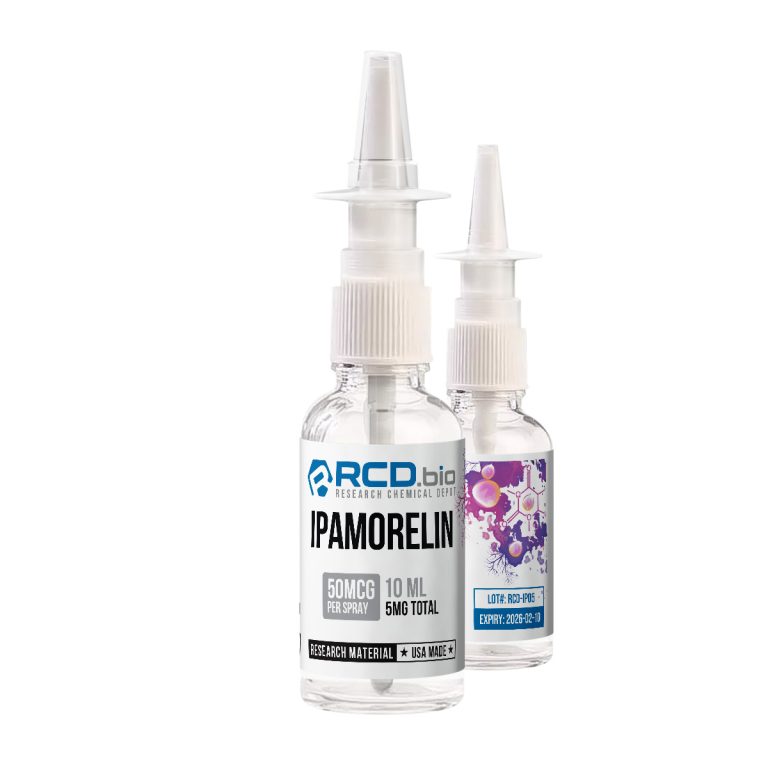
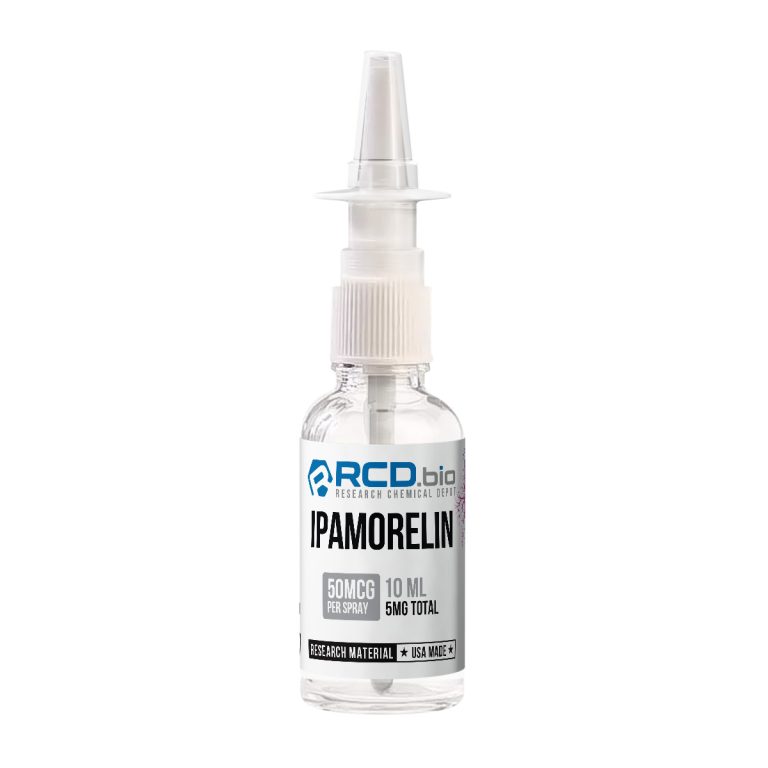
| Product Name | Ipamorelin Nasal Spray |
| Application | Scientific / Research Use Only |
| CAS Number | 170851-70-4 |
| Molar Mass | 711.87 g/mol |
| Chemical Formula | C₃₈H₄₉N₉O₅ |
| IUPAC Name | (2S)-6-Amino-2-[[(2R)-2-[[(2R)-2-[[(2S)-2-[(2-amino-2-methylpropanoyl)amino]-3-(4H-imidazol-4-yl)propanoyl]amino]-3-naphthalen-2-ylpropanoyl]amino]-3-phenylpropanoyl]amino]hexanamide |
| Synonyms | NNC 26-0161; Ipamorelin amide; Aib-His-D-2-Nal-D-Phe-Lys-NH₂ |
| Physical Form | Aqueous nasal spray solution (lyophilized peptide reconstituted in sterile buffered solution) |
| Solubility | Soluble in water and aqueous buffers |
| Storage (Lyophilized) | −20°C, desiccated, protected from light |
| Storage (Reconstituted / Nasal Spray) | 2–8°C; use within 28 days; protect from light; do not freeze reconstituted solution |
| PubChem CID | 20754357 |
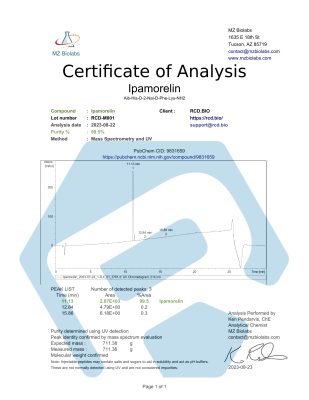
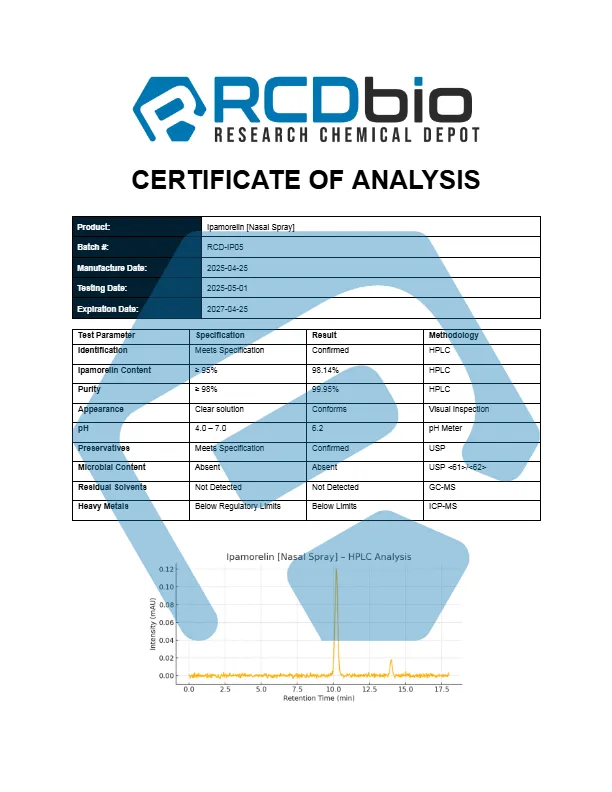
| Purity | ≥98% (HPLC verified, independent third-party laboratory analysis; COA available per batch) |
| WADA Status | PROHIBITED — 2026 WADA Prohibited List, Class S2.2.4 (Growth Hormone Releasing Factors — Growth Hormone Secretagogues). Ipamorelin is explicitly named as a prohibited growth hormone secretagogue (GHS) under WADA S2.2.4 in the 2026 Prohibited List. This prohibition applies both in and out of competition for all WADA Code signatories. RCDbio products are for laboratory research purposes only and are not supplied for use in competitive sport contexts. |
How Does Ipamorelin Work?
GHS-R1a Receptor Agonism
Mechanistically, Ipamorelin acts as a selective agonist of the ghrelin/growth hormone secretagogue receptor type 1a (GHS-R1a) in vitro and in vivo preclinical systems. GHS-R1a is a G protein-coupled receptor (GPCR) coupled to Gαq/11 signaling in pituitary somatotroph cells, and its activation initiates a phospholipase C (PLC)-mediated intracellular signaling cascade involving inositol-1,4,5-trisphosphate (IP3) generation, intracellular calcium mobilization from endoplasmic reticulum stores, and protein kinase C (PKC) activation. In pituitary somatotroph preparations, this signaling sequence culminates in growth hormone (GH) vesicle exocytosis.
Selectivity Profile: GH vs. Corticotropin and Prolactin
A defining characteristic of Ipamorelin in the preclinical GHS literature is its observed selectivity for GH secretagogue activity without equivalent stimulation of corticotropin (ACTH/cortisol) or prolactin release in rodent pituitary preparations. In direct comparison studies with GHRP-6, Ipamorelin produced GH release without the corticotropin or prolactin co-secretion responses observed with GHRP-6 at equivalent doses in rodent preparations. This selectivity profile is attributed to Ipamorelin’s specific structural interaction with GHS-R1a and the absence of activity at other GPCRs in the receptor panel studies conducted during its pharmacological characterization.
GHS-R1a Distribution and Research Implications
GHS-R1a is expressed not only in anterior pituitary somatotrophs but also in hypothalamic nuclei, cardiac tissue, gastrointestinal tract, liver, kidneys, adipose tissue, and immune cells in preclinical mammalian preparations. This broad tissue distribution is relevant to researchers investigating Ipamorelin as a pharmacological probe of GHS-R1a signaling beyond the pituitary GH axis, including gastrointestinal motility research, cardiac cell biology, and metabolic pathway investigation in cell-based systems.
Relationship to Endogenous Ghrelin
Ghrelin, the endogenous GHS-R1a ligand, is a 28-amino acid acylated peptide produced primarily in gastric X/A-like cells. Ipamorelin mimics ghrelin’s GHS-R1a agonism in pituitary somatotroph preparations but is structurally distinct, more potent on a molar basis, and more resistant to proteolytic degradation in plasma and cell culture preparations. Researchers using Ipamorelin as a GHS-R1a probe should account for potential differences in receptor binding kinetics and downstream signaling bias relative to the endogenous ligand.
Key Research Findings
These findings are derived exclusively from preclinical in vitro and in vivo animal studies. Data remains limited. Findings are not consistent across all models. This section does not constitute clinical evidence.
- Selective GH secretagogue activity: In rodent pituitary cell and in vivo rat models, Ipamorelin produced dose-dependent GH release without equivalent increases in corticotropin (ACTH/cortisol) or prolactin, distinguishing it from GHRP-6 in direct comparison preparations. [Raun et al., 1998; PMID: 9849822]
- GHS-R1a binding characterization: Radioligand competition binding assays have established Ipamorelin’s sub-nanomolar affinity for GHS-R1a in pituitary membrane preparations, with selectivity profiling across multiple GPCR receptor panels.
- In vivo GH axis modulation: Rodent in vivo experiments have documented Ipamorelin-induced plasma IGF-1 modulation following systemic administration, consistent with downstream somatotropic axis engagement via pituitary GH release.
- GI motility investigation: GHS-R1a expression in gastrointestinal smooth muscle and enteric nervous system preparations has been investigated using Ipamorelin as a pharmacological probe for post-operative ileus models in rodent systems (the indication for which it entered Phase II clinical investigation before discontinuation).
- Structural selectivity determinants: SAR analysis comparing Ipamorelin to GHRP-1, GHRP-2, and GHRP-6 in receptor binding and functional pituitary assays has identified structural elements responsible for the selectivity advantage, including the D-2-Nal and Aib contributions.
What Are the Potential Research Applications of Ipamorelin?
Ipamorelin Nasal Spray is investigated in preclinical research contexts including the following:
- GH secretagogue pharmacology: Pituitary somatotroph cell preparations and in vivo rodent models examining GHS-R1a agonism, GH release dynamics, and downstream somatotropic axis engagement.
- GHS-R1a receptor characterization: Binding assays, functional signaling studies, and GPCR panel selectivity profiling using Ipamorelin as a characterized GHS-R1a agonist probe.
- Gastrointestinal motility research: Rodent and ex vivo gut preparation models examining GHS-R1a-mediated smooth muscle and enteric nervous system effects relevant to post-operative ileus and gastrointestinal function research.
- Metabolic pathway investigation: Cell culture and in vivo systems examining GHS-R1a downstream signaling in adipose, hepatic, and cardiac tissue preparations, including insulin signaling interactions and lipid metabolism parameters.
- Intranasal peptide delivery research: Pharmacokinetic models examining nasal mucosal absorption, plasma bioavailability, and CNS distribution of pentapeptide GHS compounds delivered via intranasal route.
- Comparative GHS pharmacology: Structure-activity relationship studies comparing Ipamorelin’s selectivity and potency profile with GHRP-2, GHRP-6, Sermorelin, and other GH axis research compounds in standardized preclinical assay systems.
What Are the Potential Side Effects of Ipamorelin?
The following observations are derived exclusively from preclinical animal studies. No human safety data has been established for Ipamorelin as a research compound in this context.
- Selective pituitary effects in rodent models: Preclinical data in rat pituitary preparations indicates Ipamorelin at research-relevant doses stimulates GH release without equivalent co-stimulation of ACTH or prolactin, unlike GHRP-6. The in vivo endocrine implications of this selectivity profile in chronic exposure models have not been fully characterized.
- IGF-1 axis secondary effects: GH secretagogue activity necessarily engages downstream IGF-1 production in hepatic preparations; chronic GH axis stimulation effects on IGF-1-dependent signaling pathways are not characterized in long-term preclinical models.
- GHS-R1a off-target engagement: GHS-R1a expression in cardiac, gastrointestinal, and immune cell preparations means that systemic Ipamorelin exposure in in vivo models engages receptor populations beyond the pituitary; the functional consequences of multi-tissue GHS-R1a activation are not fully characterized.
- No chronic toxicity data is available for any species in peer-reviewed literature. Long-term safety, reproductive toxicity, and genotoxicity are uncharacterized.
- Data remains limited. No human safety data has been established.
Risk & Handling
Handling Precautions
Ipamorelin Nasal Spray is intended for use by trained laboratory personnel only. The following precautions apply:
- PPE required: nitrile gloves, laboratory coat, and eye protection at minimum.
- Handle reconstituted nasal spray solution in a clean laboratory environment; avoid aerosol generation during manipulation or transfer.
- Ipamorelin is a biologically active GHS-R1a agonist. Avoid contact with mucous membranes, eyes, or skin during all handling operations.
- Pipetting and aliquoting should be performed with calibrated laboratory equipment.
- Dispose of biological waste and spent solutions in accordance with institutional biosafety protocols and applicable local regulations.
Exposure Risks
Risk Tier: MODERATE to HIGH
Ipamorelin is a potent, selective GHS-R1a agonist explicitly prohibited under the 2026 WADA Prohibited List (S2.2.4). No human safety data has been established for the research compound. It engages GHS-R1a across multiple tissue systems in vivo, and chronic toxicity data is absent from the peer-reviewed literature. Risk tier designation reflects the compound’s endocrine activity profile and WADA prohibition status. Researchers must apply institutional biosafety protocols appropriate for endocrine-active research peptides.
Storage
- Lyophilized: Store at −20°C in a desiccated, airtight container protected from light and moisture. Stable for up to 24 months under these conditions.
- Reconstituted / Nasal Spray: Maintain at 2–8°C. Use within 28 days of preparation. Do not freeze reconstituted solution. Protect from direct light exposure.
- Freeze-thaw: Avoid repeated freeze-thaw cycles of the lyophilized peptide. Aliquot prior to first use to preserve structural and functional integrity.
- Supplied in sterile, sealed amber glass or HDPE spray container as appropriate.
FAQs
Q1: What is the reported plasma half-life of Ipamorelin in preclinical models? Ipamorelin’s reported elimination half-life is approximately 2 hours. This has been established in both rodent preclinical pharmacokinetic models and in a human volunteer PK/PD study (Gobburu et al., 1999, PMID: 10496661) conducted during its clinical development investigation. These figures apply to the pharmaceutical formulation studied in clinical settings; pharmacokinetic parameters for the research-grade formulation supplied by RCDbio have not been independently established.
Q2: How does Ipamorelin differ from GHRP-6 in preclinical selectivity studies? In direct pituitary cell preparation and in vivo rat comparison studies, Ipamorelin produced equivalent GH secretagogue activity to GHRP-6 while exhibiting substantially reduced corticotropin (ACTH/cortisol) and prolactin co-secretion responses. This differential selectivity profile, attributed to distinct receptor interaction characteristics at GHS-R1a versus other GPCRs engaged by GHRP-6, defines Ipamorelin’s primary research advantage as a selective GHS-R1a pharmacological probe.
Q3: Is Ipamorelin on the WADA Prohibited List? Yes. Ipamorelin is explicitly named as a prohibited substance on the 2026 WADA Prohibited List under class S2.2.4 (Growth Hormone Releasing Factors — Growth Hormone Secretagogues). This prohibition applies both in and out of competition for all WADA Code signatories. RCDbio products are supplied exclusively for laboratory research and are not appropriate for use in any context governed by the WADA Code.
Q4: What is the recommended storage for reconstituted Ipamorelin Nasal Spray? Reconstituted nasal spray solution should be stored at 2–8°C and used within 28 days of preparation. Lyophilized stock should be maintained at −20°C, desiccated and protected from light, for up to 24 months from the manufacturing date.
Q5: Can Ipamorelin be used as a GHS-R1a probe in non-pituitary cell systems? GHS-R1a is expressed in multiple tissue types including cardiac cells, gastric mucosa cells, enteric neurons, hepatocytes, adipocytes, and immune cells in preclinical preparations. Ipamorelin’s characterized selectivity at GHS-R1a makes it an appropriate pharmacological probe for GHS-R1a-mediated signaling research in these non-pituitary systems; researchers should account for the endogenous ghrelin system expression profile in their chosen cell or tissue model.
Q6: What preclinical toxicity data is available for Ipamorelin? Available preclinical data covers acute and short-term administration in rodent models. No comprehensive chronic toxicology, reproductive toxicity, or genotoxicity data is available in peer-reviewed literature. Endocrine activity via GH axis engagement and multi-tissue GHS-R1a expression warrant MODERATE to HIGH tier handling precautions. No human safety data has been established.
Related Research Compounds
Section pending internal URL confirmation. All products listed are for laboratory and research purposes only.
References
- Raun K, Hansen BS, Johansen NL, Thøgersen H, Madsen K, Ankersen M, Andersen PH. Ipamorelin, the first selective growth hormone secretagogue. European Journal of Endocrinology. 1998;139(5):552–561. https://pubmed.ncbi.nlm.nih.gov/9849822/
- Gobburu JV, Agersø H, Jusko WJ, Ynddal L. Pharmacokinetic-pharmacodynamic modeling of ipamorelin, a growth hormone releasing peptide, in human volunteers. Pharmaceutical Research. 1999;16(9):1412–1416. https://pubmed.ncbi.nlm.nih.gov/10496661/
- Johansen PB, Nowak J, Skjaerbaek C, Flyvbjerg A, Andreassen TT, Ørskov H, Mosekilde L. Ipamorelin, a new growth-hormone-releasing peptide, induces longitudinal bone growth in rats. Growth Hormone & IGF Research. 1999;9(2):106–113. https://pubmed.ncbi.nlm.nih.gov/10373343/
- Bowers CY. History and current status of growth hormone-releasing peptides and growth hormone secretagogue receptor agonists. Endocrine Development. 2013;24:1–17. https://pubmed.ncbi.nlm.nih.gov/23392096/
Disclaimer
Ipamorelin Nasal Spray is exclusively for laboratory research purposes. RCDbio products are not intended to diagnose, prevent, treat, or cure any disease or medical condition.
The Food and Drug Administration has not evaluated the statements on our website. This product is not approved for human or veterinary use. Researchers must comply with all applicable local, state, and federal laws and regulations governing the purchase and use of research compounds. By purchasing, you agree to our Terms and Conditions. RCDbio reserves the right to refuse sales to unauthorized individuals.
ATTENTION: All RCDbio products are strictly for LABORATORY AND RESEARCH PURPOSES ONLY. They are not intended for human consumption, veterinary use, or any other non-research application. For queries, complaints, or support, contact support@rcdbio.co

Reviews
There are no reviews yet