

Description
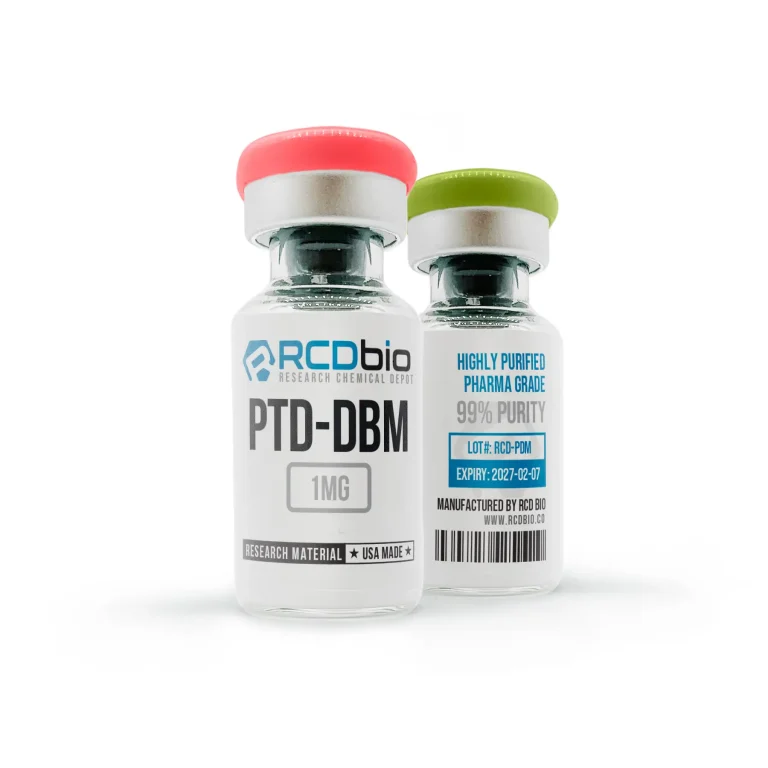
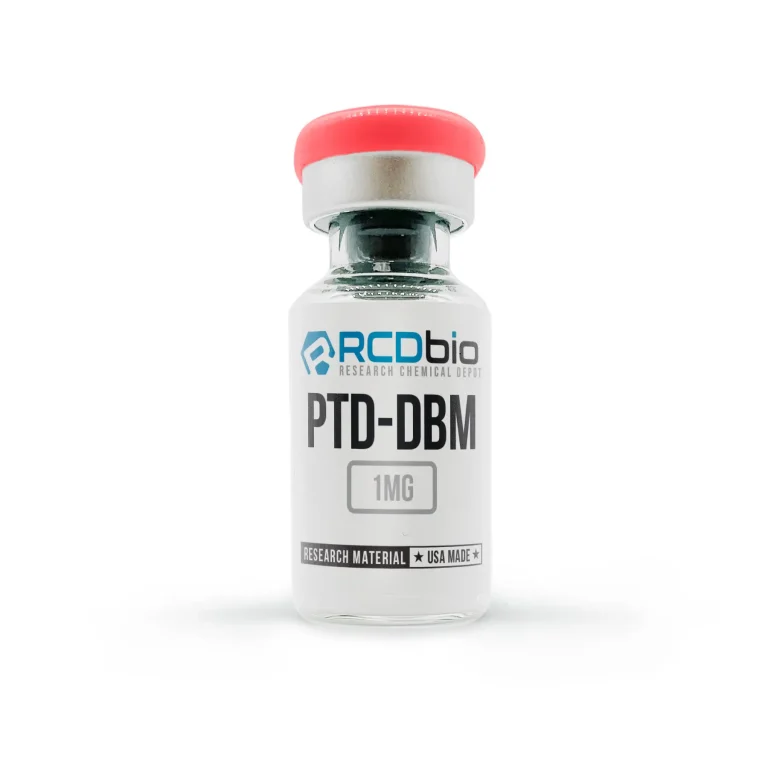
PTD-DBM
PTD-DBM is a synthetic cell-penetrating peptide with the potential to modulate intracellular Wnt/β-catenin signaling pathways through targeted protein-protein interactions in laboratory settings. PTD-DBM is typically synthesized as a TFA (trifluoroacetate) salt, which enhances peptide stability and handling.
The peptide is a potentially synthetic fusion of the protein transduction domain (PTD) and dishevelled binding motif (DBM). Dishevelled (DVL) is a key mediator of Wnt signaling pathways and is believed to influence cellular processes, folic development, and cell regeneration in experimental models.
Molecular Structure of PTD-DBM
PTD-DBM is composed of a protein fusion linked to a single amino acid chain. PTD (short peptide segment) is linked to positively charged L amino acids such as arginine and lysine, which confer strong electrostatic affinity for the cell membrane.
Besides this, DBM contains a specific amino acid sequence with the potential to selectively bind to the PDZ domain of the Dishevelled (DVL) protein.
Chemical Properties:
| Product Name | PTD-DBM |
| CAS | 1764539-31-1 |
| Molar Mass | 3082.6 g/mol |
| Chemical Formula | C124H225N61O28S2 |
| Synonyms | PTD-DBM, EX-A13483 |
| IUPAC Name | L-arginyl-L-arginyl-L-arginyl-L-arginyl-L-arginyl-L-arginyl-L-arginyl-L-arginyl-glycyl-glycyl-glycyl-glycyl-L-arginyl-L-lysyl-L-threonyl-glycyl-L-histidyl-L-glutaminyl-L-isoleucyl-L-cysteinyl-L-lysyl-L-phenylalanyl-L-arginyl-L-lysyl-L-cysteine |
What is the Working Mechanism of PTD-DBM Peptide?
Research-based studies on experimental models have shown the peptide mechanism centered on its ability to modulate intracellular Wnt/β-catenin signaling. Here is the detailed breakdown:
Interaction with CXXC5 and Dishevelled
- Studies suggest that CXXC5 and Dishevelled (Dvl) are two important proteins that PTD-DBM targets. CXXC5 binds to Dishevelled and suppresses the Wnt/β-catenin signaling pathway in research settings.
- The pathway is believed to influence processes like cell growth, tissue repair, and hair follicle development in research models.
- Preclinical studies indicate that PTD-DBM contains a Dishevelled Binding Motif (DBM). The DBM itself mimics the natural binding region, which effectively blocks CXXC5 from attaching to Dishevelled.
Activation of Wnt/β-catenin Pathway
- This activation increases the levels of a protein called β-catenin. The protein may stimulate gene expression related to cell proliferation, differentiation, and regeneration.
- PTD-DBM disrupts the CXXC5-Dvl interaction between PTD-DBM to reactivate Wnt/β-catenin pathways in laboratory settings.
What Are the Potential Research Observations of the Peptide?
While PTD-DBM is still under research, some areas of scientific interest include:
- It may stimulate hair follicle regeneration in research models.
- It may accelerate wound healing in lab studies.
- It may promote skin and tissue repair in preclinical research.
- It may activate the Wnt/β-catenin pathway for regeneration in research subjects.
What Are the Potential Side Effects of the Peptide?
These are possible observed side effects under laboratory conditions:
- Temporary fatigue
- Peptide instability
- Mild headaches
- Skin irritation
FAQs
What are the optimal storage conditions for PTD-DBM Peptide?
The optimal storage recommendation is to store in a cool and dry place at 2–8°C. Keep it protected from direct sunlight and moisture.
In what form does the peptide come?
These peptides typically come as a freeze-dried powder (lyophilized form). It is easy for researchers to mix the peptide powder in different solutions for laboratory experiments.
Is the PTD-DBM peptide approved for medical use in the USA?
No, the research-grade peptide is not yet approved by the FDA and is only available for preclinical research purposes. So, these peptide powders remain an investigational compound.
How should peptide powders be handled?
These compounds should be handled under controlled laboratory conditions, following standard laboratory safety protocols.
Disclaimer
PTD-DBM is intended exclusively for laboratory research purposes. RCDbio products are not intended to diagnose, treat, cure, or prevent any disease. The Food and Drug Administration has not evaluated the statements on our website. By purchasing, you agree to our Terms and Conditions.
For queries, complaints, or support, please contact support@rcdbio.co.
Reviews
There are no reviews yet